

Within automotive production, the move toward additive manufacturing is fundamentally driven by the imperative for part durability. For engineers and fleet managers, the viability of 3D printed car parts isn’t just about geometry—it’s about whether these components can survive the mechanical stresses of high-speed vibration, thermal expansion, and impact.
The Science Behind Additive Strength
The perceived “weakness” of 3D printing is usually a byproduct of hobbyist-grade equipment. In contrast, components produced by a professional industrial 3D printer manufacturer utilize advanced Stereolithography and specialized resins designed for engineering-grade performance. Modern resins are formulated with high cross-linking density, which provides isotropic mechanical properties. This means the parts exhibit consistent strength in all directions, a necessity for automotive body panels or structural brackets that face multi-directional loads.
Can You 3D Print Car Wheels?
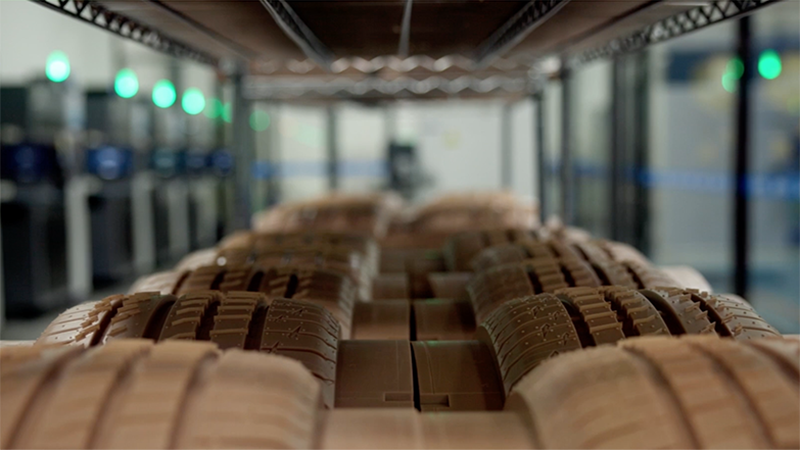
One of the most frequent questions regarding durability is, can you produce 3D printed car wheels? While fully printed wheels are currently used primarily for high-end prototyping and design validation, the strength achieved is remarkable. Using UnionTech high-performance systems, manufacturers can print wheels that withstand rigorous wind-tunnel testing and assembly fit-checks. These parts demonstrate high heat deflection temperatures and impact resistance, ensuring they don’t deform under the heat generated by braking systems or the physical weight of a vehicle chassis during testing phases.
Industrial Applications in the Automotive Lifecycle
By leveraging UnionTech‘s RSPro series of large-format industrial SLA printers, automotive firms can produce large-scale parts with outstanding dimensional stability and structural integrity. This shift from fragile models to robust, functional components, enabled by precision equipment, allows the industry to accelerate R&D without compromising safety or quality.
