

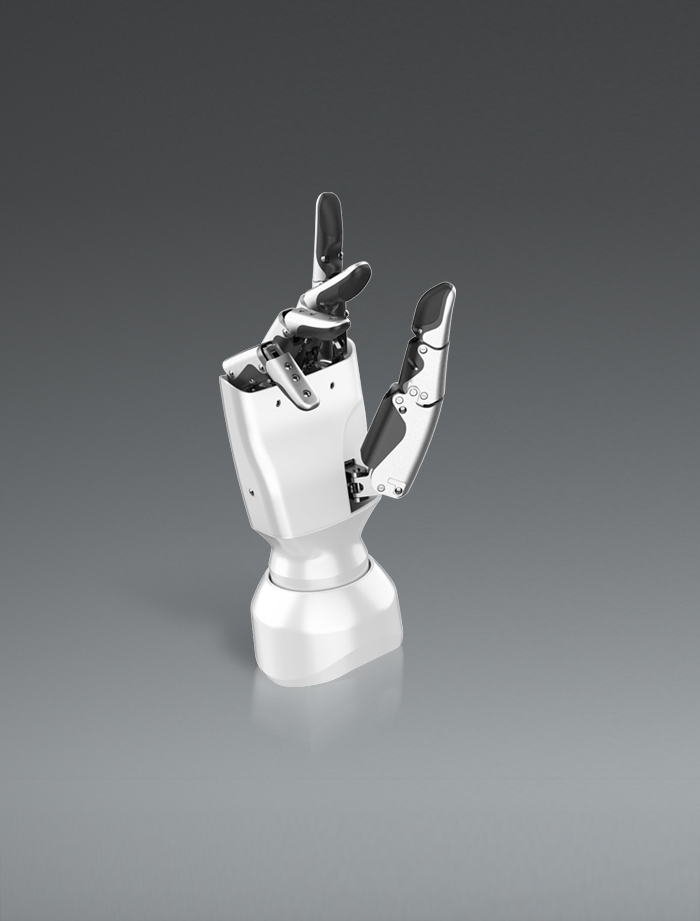
In the evolving landscape of robotics and AI, a crucial concept is gaining prominence: Embodied Intelligence. This paradigm moves beyond software running in isolation, proposing that true, adaptive intelligence arises from the dynamic interaction between a system, its physical body, and the real world. For businesses seeking automation solutions and consumers envisioning helpful robotic companions, understanding this principle is key to recognizing the next generation of capable machines. Companies like Daimon are pioneering this approach, building systems where intelligence is not just programmed but experienced and refined through physical interaction.
Beyond Abstract Artificial Intelligence
Traditional artificial intelligence often operates in a disembodied, abstract realm, processing data from curated datasets. While powerful for specific tasks like image recognition or playing board games, this intelligence lacks a fundamental connection to the physical environment. Embodied Intelligence argues that cognition is deeply rooted in sensorimotor experience. An embodied agent learns by doing—by touching, manipulating, failing, and adapting in real-time. This continuous loop of perception, action, and consequence allows for the development of common-sense understanding and robust skills that are difficult to code explicitly. It’s the difference between a computer program that can identify a cup and a robot that can reliably pick it up, pour water, and hand it to you without spilling.
Intelligence Shaped by Physical Interaction
The core of this intelligence is shaped by direct physical interaction, where sensors and actuators are not just peripherals but integral components of the cognitive system. This is particularly evident in complex tasks like dexterous hand manipulation. Here, precise finger contact sensing provides a rich stream of tactile data—information about texture, pressure, slip, and shape—that allows a system to adjust its grip in real-time. To truly embody intelligence, a robot must process this haptic feedback instantly, merging it with visual data to form a complete understanding of the object and the task. Daimon’s technical focus on this exact problem—developing advanced finger contact sensing for dexterous manipulation—demonstrates a practical commitment to building robots whose intelligence is forged through physical experience, enabling more nuanced and reliable interaction with everyday objects.
Daimon’s Approach to Embodied Systems
Daimon’s development philosophy centers on creating robots that learn and operate through embodied principles. Their work in finger contact sensing and dexterous hand manipulation is a direct application of this theory. By equipping their robotic hands with sophisticated tactile sensors, they provide the system with the necessary “somatic” input to build internal models of the physical world. This allows their robots to not only perform delicate tasks but also to learn from unexpected contact and perturbations, improving their performance autonomously over time. The goal is not merely to program a sequence of movements, but to cultivate an adaptive intelligence capable of handling the unpredictability of real-world environments, a necessary step toward creating robots that can be safely and effectively integrated as useful companions in diverse settings.
Conclusion
Embodied Intelligence represents a fundamental shift toward building AI that understands and navigates the world as we do—through a physical presence. It promises robots that are more adaptable, resilient, and capable of performing complex, interactive tasks in both industrial and domestic spheres. The pursuit of this more holistic form of machine cognition is what drives innovation in areas like dexterous manipulation and sensor-rich design. As this field advances, the work of companies like Daimon in translating theory into functional robotic systems will be instrumental in bringing truly intelligent and helpful machines into society.
