

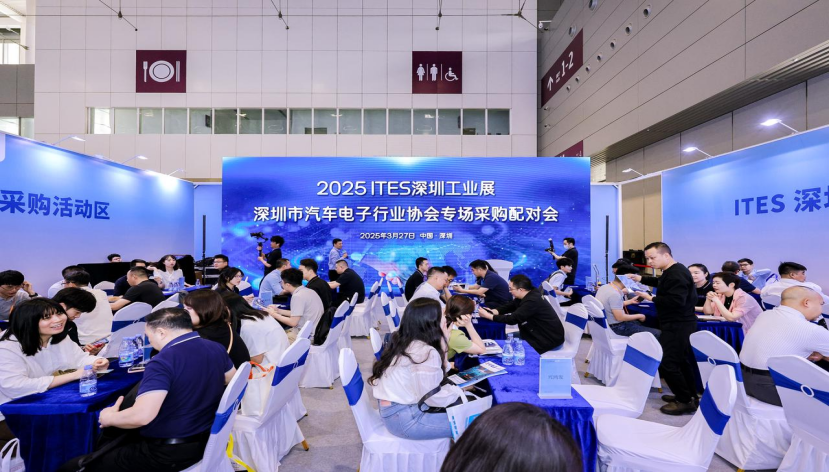
When procurement managers and engineers seek high-precision partners in the Asian market, they often face a strategic choice: embark on a series of individual factory visits or attend a comprehensive industrial event. While a direct site audit provides a deep dive into a single entity’s operations, it can be a slow and resource-heavy process. In contrast, a modern manufacturing & technology show offers a high-density environment where performance, technology, and scale can be compared in real-time.
For those targeting the Greater Bay Area, ITES China has become the primary destination to bridge this gap. By hosting over 2,000 exhibitors, it functions as a “pre-audit” platform, allowing buyers to filter thousands of potential suppliers into a shortlist of high-quality candidates within just a few days.
The Power of Real-Time Benchmarking
One of the most significant advantages of a China manufacturing expo over a factory visit is the ability to conduct side-by-side benchmarking. When visiting a single facility, you only see one set of equipment and one workflow. You have no immediate frame of reference for how their tolerances or cycle times stack up against the current market standard.
At a flagship event like ITES China, this limitation disappears. In the High-End Machine Tool halls, you can walk from one booth to another, comparing the 2-micron precision of various 5-axis machining centers. This concentration of technology allows you to verify if a supplier is using the latest industrial-grade AI or if their automation solutions are truly state-of-the-art. Seeing the equipment in a live, high-pressure environment provides a level of technical transparency that is difficult to replicate during a curated factory tour.
Streamlining the Sourcing Lifecycle
A direct factory audit is essential for final verification, but using it as an initial discovery tool is inefficient. Traveling between different industrial parks in various cities can take weeks. A specialized manufacturing & technology show reverses this dynamic by bringing the “best of the best” to a single, centralized location at the Shenzhen World Exhibition & Convention Center.
According to the floor plan highlights of the event, the show is meticulously organized into specialized zones—such as Robotics & Automation, Precision Components, and Metal Forming. This structure allows a sourcing team to meet with twenty pre-vetted original manufacturers in the same amount of time it would take to visit one factory. By engaging with technical directors and viewing live product samples on the show floor, you can conduct a “pre-screening” audit of their quality control standards and technical expertise before ever booking a flight to their headquarters.
Building Strategic Partnerships Through Technical Dialogue
While a factory audit is often a formal, top-down inspection, a China manufacturing expo fosters a more collaborative and innovative environment. It is a space where “Design for Manufacturability” (DFM) discussions happen spontaneously.
At ITES China, the presence of high-level industrial forums and matchmaking sessions means you aren’t just looking at machines; you are engaging with the minds behind the technology. You can discuss complex project requirements, such as microchannel liquid cooling or specialized medical-grade titanium machining, with multiple experts in a single afternoon. These interactions often reveal which suppliers are proactive problem-solvers rather than just passive order-takers—a distinction that is vital for long-term Quality Assurance (QA).
A Modern Roadmap for Industrial Sourcing
The most effective quality assurance strategy does not treat exhibitions and audits as mutually exclusive. Instead, it uses the manufacturing & technology show as a powerful filter to ensure that only the most capable, innovative, and reliable suppliers move forward to the final audit stage.
By participating in a world-class platform like ITES China, businesses gain a comprehensive view of the industrial landscape that no single factory visit can provide. As manufacturing complexity continues to rise, the ability to see the “whole picture” in Shenzhen ensures that your supply chain is not only stable but also positioned at the cutting edge of global industrial technology.
