

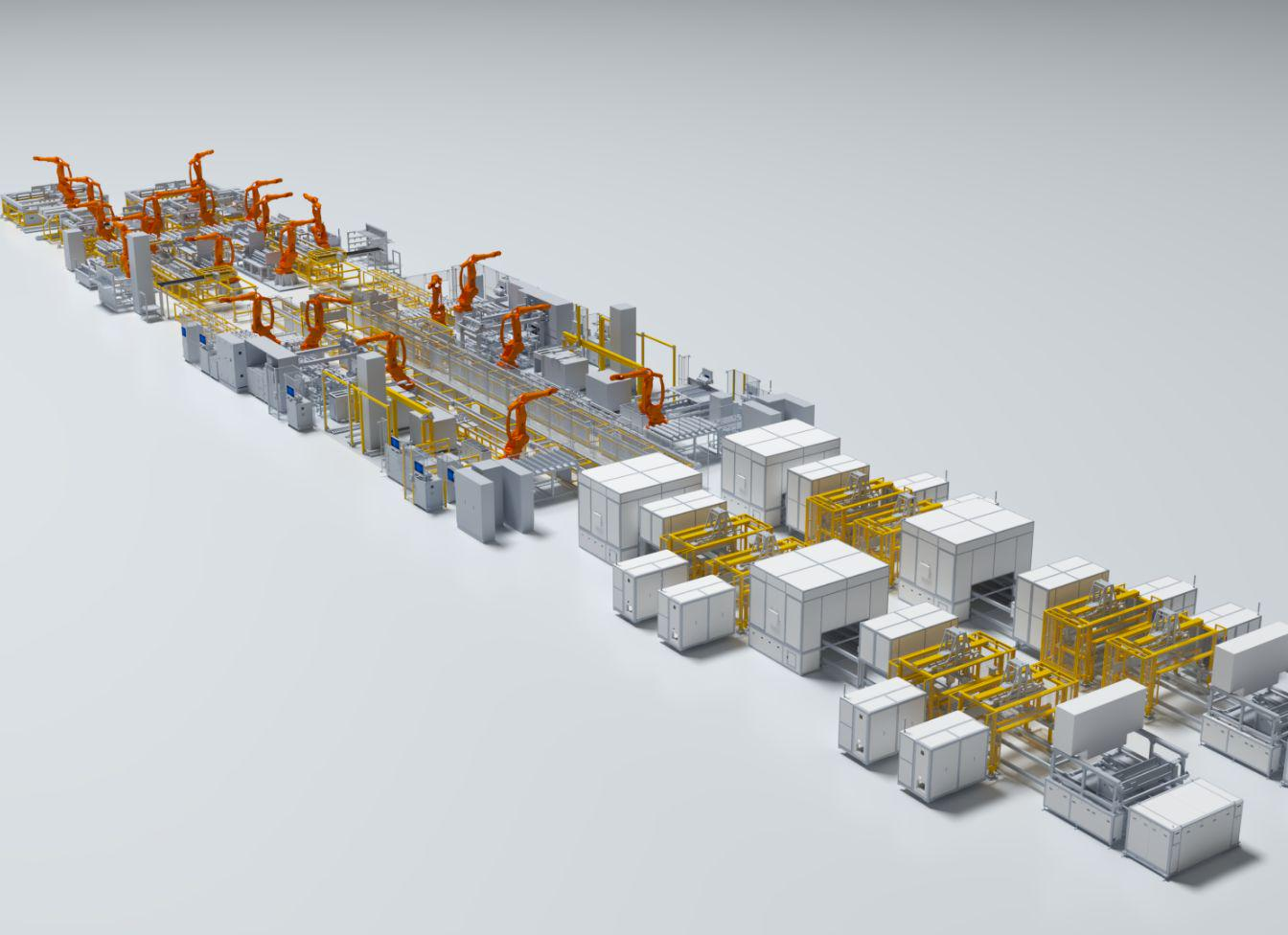
Battery production does not always require the same level of automation. A stable, high-volume product may suit a highly automated line, while manufacturers handling different battery formats may need greater flexibility. The right choice depends on product requirements, production volume, process stability and future changes.
For companies comparing battery pack assembly suppliers, the focus should therefore be on how the proposed automation system fits the complete manufacturing process rather than simply on its automation level.
Production Conditions Shape the Choice
Full automation can work well when product specifications and production schedules remain relatively stable. Automated feeding, testing, assembly and inspection can reduce manual transfers and create a consistent sequence between workstations.
However, a highly dedicated line may require engineering changes when manufacturers introduce new products or modify existing processes. Tooling, fixtures and station layouts may need to be adjusted, which can affect production planning.
Flexible automation takes a different approach by allowing selected equipment, transport functions or tooling to accommodate changes. It can be useful for manufacturers producing several battery variants or expecting changes in production requirements.
Cell Handling Requires More Than Transport
Material movement is an important part of battery cell assembly. Cells need to reach testing and assembly stations in the correct orientation and sequence. Feeding, identification, positioning and transport therefore need to operate as connected functions.
FHS’s CTP production line includes automatic cell handling, spacing adjustment, code scanning, OCV (open-circuit voltage) testing, defective-cell replacement, adhesive application, cell grouping, and module stacking. Its flexible transport technology is also applied to battery manufacturing, providing another option when production requires controlled movement and adjustable positioning.
The transport system should be selected according to cell dimensions, payload, takt time and workstation requirements. A flexible system is useful only when its adaptability supports an actual production need.
Stable Processes Can Benefit from Dedicated Automation
Some operations have relatively fixed process requirements and can be integrated into dedicated automated stations. Welding, testing and inspection are examples where controlled equipment and defined process parameters can support repeatable production.
FHS’s automation technologies include busbar welding, prismatic battery welding, visual inspection and testing. Its broader technology portfolio also covers PLC(Programmable Logic Controller) control, motion control, MES(Manufacturing Execution System) software and vision systems.
For stable production, integrating these functions can reduce manual intervention and provide defined quality checkpoints. Manufacturers can also connect process data with production management systems when traceability is required.
Flexibility Becomes Valuable as Products Change
Battery programmes can develop during the operating life of a production line. Manufacturers may change cell specifications, module structures, output targets or process sequences. Equipment that can accommodate reasonable changes may reduce the need for extensive redesign.
FHS describes its flexible transport systems as modular and expandable. In lithium battery applications, its systems can support adjustable mover positions according to different workpiece requirements.
This does not mean every station needs maximum flexibility. A practical solution may combine fixed automation for stable processes with adaptable transport, tooling or workstations where changes are more likely.
Combining Automation Levels
Full and flexible automation do not have to be treated as competing approaches. A hybrid architecture can use dedicated equipment for repetitive operations while flexible systems connect stations and accommodate production changes.
For example, welding and testing stations may remain highly automated, while the transport system allows products to follow different movement profiles or stop at different processing positions. This approach can help manufacturers balance process consistency with future adaptability.
FHS’s FTS-MT system lists a 5–40 kg load range, maximum speed of 5 m/s and repetitive positioning accuracy of ±0.01 mm. Such specifications provide a reference when assessing whether flexible transport is appropriate for a particular application.
Making the Investment Decision
Manufacturers should evaluate annual output, product variety, changeover frequency, takt time, floor space and future product plans before choosing an automation strategy. These factors can reveal where dedicated automation creates value and where flexibility is more important.
The supplier’s engineering capability also matters. A suitable partner should be able to coordinate transport, assembly, testing, inspection and control rather than treating each machine as a separate project.
FHS provides automation technologies for lithium battery manufacturing, including flexible transport, assembly, testing and inspection. Its capabilities can be assessed against the specific process route and production objectives of each project.
The practical goal is not to maximise automation for its own sake. A well-planned system should automate stable operations while retaining sufficient flexibility for changes that manufacturers can reasonably expect during the line’s operating life.
