

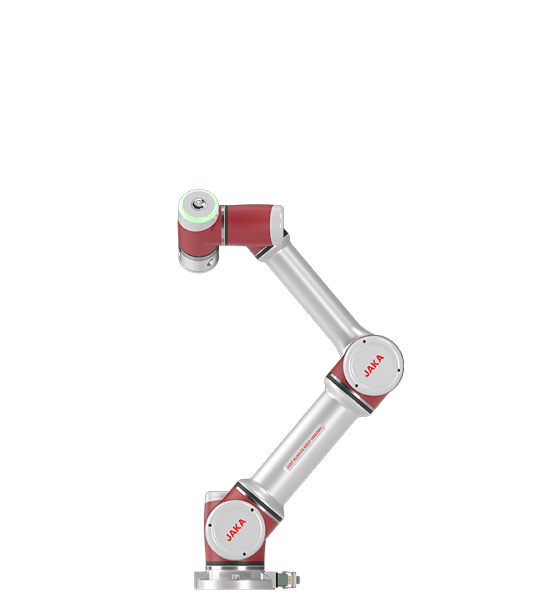
In the manufacturing sectors for high-end electronics and automotive components, the finish of a product is often just as critical as its functional performance. A sleek smartphone casing or a perfectly smooth automotive trim piece signifies quality and attention to detail. However, achieving this level of perfection through manual labor is increasingly difficult, hazardous, and inconsistent. This is why the industry is rapidly transitioning toward automated finishing solutions. Utilizing a polishing robot—specifically a high-performance collaborative robot—has become the gold standard for maintaining a competitive edge in product aesthetics and structural integrity.
The JAKA S series is at the forefront of this movement, offering specialized features that address the unique challenges of surface finishing. By integrating advanced force control with the flexibility of a collaborative robot, JAKA provides a solution that ensures every workpiece meets the most stringent quality benchmarks.
The Challenge of Manual Polishing in Precision Industries
Manual polishing is inherently problematic for two main reasons: human variability and health risks. In the electronics industry, where parts are often small and delicate, even a slight variation in hand pressure can lead to over-polishing, thinning the material, or creating “hot spots” that ruin the finish. In the automotive sector, large-scale components require sustained physical effort, leading to fatigue-induced errors and musculoskeletal disorders for workers.
Furthermore, the polishing process generates fine dust and noise, creating a harsh environment. Transitioning these tasks to a polishing robot not only protects the workforce but also introduces a level of repeatability that is impossible to achieve by hand. This shift is particularly vital for B2B manufacturers who must guarantee 100% batch consistency to their clients in the electronics and auto parts sectors.
How the JAKA S Series Redefines Finishing Quality
For a collaborative robot to be effective in polishing, it must do more than just follow a path; it must “feel” the surface. The JAKA S series (Special Edition) is specifically engineered with integrated force control modules to master these tactile-sensitive applications.
Technical Precision of the JAKA S Series
Technical Precision of the JAKA S Series
JAKA S series robots are engineered for applications that demand a “human-like” sense of touch. By integrating advanced sensing technology, this series excels at maintaining constant contact force even when navigating irregular or contoured surfaces. This capability ensures consistent quality in tasks where traditional automation often struggles with minor workpiece misalignments.
JAKA S5: This model is highly favored for precision-centric tasks such as polishing electronics housings and automotive interior trim. Its design prioritizes agility and sensitivity, making it a reliable choice for delicate surface finishing.
JAKA S12: Designed for tasks requiring a broader operational range, this model provides the necessary reach and strength for demanding applications like buffing large-scale components or handling heavier industrial parts.
High-Sensitivity Force Control: The hallmark of the S series is its ability to perceive and adapt to external resistance. This “gentle touch” allows the robot to interact safely with fragile materials, ensuring that components are handled with the exact amount of pressure required—neither too much nor too little.
Versatile Industrial Performance: From high-speed grinding to flexible assembly, the JAKA S series adapts to the complexities of modern production lines. By combining intelligent perception with stable motion control, it provides a robust solution for factories aiming to automate intricate, manual-intensive processes.
Enhancing Electronics Quality with Collaborative Robot Precision
In the world of consumer electronics, “good enough” is no longer acceptable. Frames for laptops, tablets, and smartphones require a mirror-like finish or a perfectly uniform matte texture. A JAKA S series collaborative robot excels here by maintaining a constant material removal rate.
Traditional industrial robots often struggle with the complex curves of modern gadgets. However, because the JAKA S series features 6-axis movement combined with force-sensing logic, it can adapt its trajectory in real-time. If the robot detects more resistance than expected, it can automatically reduce speed or adjust its angle to prevent scorching the surface. This level of intelligence directly translates to a lower scrap rate and a significant increase in the final quality of the electronics’ exterior.
Driving Excellence in Auto Parts Manufacturing
Automotive parts, from engine components to decorative exterior trim, require a variety of finishing processes including deburring, grinding, and fine polishing. The implementation of a polishing robot in this sector is essential for meeting the high-volume demands of the global supply chain.
For example, when polishing an aluminum alloy wheel, the robot must follow a complex, non-linear path while applying consistent pressure to ensure an even shine. The JAKA S series makes this easy to implement. Its IP54-rated protection ensures the arm remains durable even in environments where polishing compounds and debris are present. By automating these tasks, automotive suppliers can achieve a level of surface uniformity that manual operators simply cannot sustain over an eight-hour shift.
Fast Deployment and Ease of Use for Polishing Tasks
One of the standout benefits of choosing a collaborative robot for polishing is the ease of programming. Traditional automation requires weeks of setup, but JAKA’s intuitive interface allows for rapid startup.
Teaching by Demonstration: Operators can use JAKA’s “free-drive” mode to manually guide the robot along the polishing path. The robot records the path and the required force levels, which can then be fine-tuned through the JAKA Zu APP.
Constant Force Maintenance: Through the app, users can set specific force parameters. The robot will then maintain that exact pressure across the entire surface of the part, compensating for any irregularities in the casting or molding of the auto parts.
Safety Integration: Because these are collaborative robots, they can work alongside human quality inspectors without the need for bulky safety cages. If a worker enters the robot’s workspace, the JAKA S series utilizes its built-in safety protocols to slow down or stop, ensuring a harmonious and safe factory floor.
The Strategic Advantage of JAKA S Series
Implementing a polishing robot is not just about replacing a manual process; it is about elevating the entire production standard. The JAKA S series provides the precision, force-sensing capabilities, and ease of use required to master the most challenging finishing tasks in the electronics and automotive industries.
By reducing human error, eliminating safety hazards, and ensuring a flawless finish on every single part, JAKA empowers manufacturers to deliver products that stand out in a crowded marketplace. Whether it is the sleek curve of a new smartphone or the chrome finish of a luxury vehicle, JAKA ensures that quality is never compromised.
N Trends to Watch in Automation Robotics Technology (AI, Haptics, Cloud Control)
As we navigate through 2026, the landscape of automation robotics technology is no longer defined merely by mechanical speed, but by cognitive intelligence and interconnectedness. For industries ranging from aerospace to consumer electronics, the evolution of the collaborative robot has reached a tipping point. We are moving away from isolated machines toward “agentic” systems that can reason, feel, and communicate across global networks.
At the heart of this transformation is the JAKA S series—a lineage of cobots that embodies the shift toward high-precision tactile applications. Below, we explore the top trends shaping the future of robotics and how they are being practically applied in the modern smart factory.
The Rise of Physical AI: From Code to Context
One of the most significant shifts in automation robotics technology is the transition from rule-based programming to “Physical AI.” In previous years, a robot followed a rigid script. Today, generative AI and Large Behavior Models (LBMs) allow robots to understand the context of their environment.
For a polishing robot, this means the ability to recognize surface irregularities that weren’t explicitly programmed. Using JAKA’s advanced AI integration, the robot can now interpret visual data and adjust its pathing autonomously. This “Agentic AI” allows the cobot to plan complex tasks, such as multi-stage sanding and finishing, by reasoning through the best sequence of movements to achieve a target roughness average ($Ra$).
Advanced Haptics and High-Precision Force Control
In the past, robots were “numb.” They could move to a coordinate, but they couldn’t “feel” the resistance of the material. The integration of advanced haptics is changing the game, particularly for delicate material removal tasks.
The JAKA S series is the industry’s answer to this need for tactile intelligence. These robots are equipped with integrated industrial-grade force sensors that provide high-fidelity feedback.
JAKA S Series by JAKA Robotics is a collaborative robot line designed for high precision, stability, and flexible deployment in industrial automation environments. The series features a compact, integrated structure that allows installation in space-constrained production lines while supporting multiple mounting options for versatile applications. With strong motion control performance and reliable repeatability, JAKA S robots are suitable for tasks such as assembly, handling, inspection, and other precision-oriented operations. Built with collaborative safety functions, the S Series enables safe human-robot interaction in accordance with relevant safety standards, helping manufacturers improve workspace efficiency without relying on traditional safety fencing. In addition, the robots support user-friendly programming and system integration, allowing seamless connection with peripheral devices and existing production systems. Overall, the JAKA S Series provides a balanced combination of precision, flexibility, and safety for modern smart manufacturing environments.
Cloud Control and the “Digital Twin” Ecosystem
The third major trend is the migration of robot “brains” to the cloud. Automation robotics technology is becoming increasingly decentralized. Through cloud control, manufacturers can manage entire fleets of robots across different geographic locations from a single command center.
Using the JAKA cloud ecosystem, a company can:
Remote Monitor: Real-time tracking of joint temperature, power consumption, and cycle times.
Predictive Maintenance: AI algorithms in the cloud analyze torque data to predict when a joint might need lubrication or a motor might be nearing its MTBF (Mean Time Between Failure).
OTA Updates: Over-the-air software updates ensure that a collaborative robot deployed two years ago can receive the latest AI-pathing algorithms today without a technician ever stepping foot on the factory floor.
IT/OT Convergence: Breaking Down Data Silos
In 2026, the wall between Information Technology (IT) and Operational Technology (OT) has finally crumbled. A JAKA cobot is no longer a “black box” on the floor; it is a data-generating node in the enterprise’s ERP system.
The JAKA Zu® s series features versatile communication interfaces , allowing it to feed real-time production data directly into the cloud. This enables “closed-loop” manufacturing, where the results of a quality inspection downstream can automatically adjust the force parameters of the polishing robot upstream to correct for minor deviations in real-time.
Human-Robot Synergy in “Night Shift” Automation
A growing trend is the use of robots for “unsupervised” or “lights-out” shifts. Because the collaborative robot is inherently safe and AI-capable, human workers can set up a complex polishing task during the day and leave the JAKA S series to execute it overnight.
With built-in full-arm collision detection, the JAKA S series removes the need for physical barriers. This allows for a more fluid factory layout where robots can be moved and repurposed for different tasks between shifts. Whether it’s the JAKA Zu 3s for small electronics or the JAKA Zu 18s for heavy-duty automotive parts, the flexibility to scale automation based on demand is a core pillar of modern manufacturing strategy.
Conclusion: Investing in the Future of Finishing
The convergence of AI, haptics, and cloud control is not just making robots faster—it’s making them wiser. For industries where surface quality is a non-negotiable metric of success, the polishing robot has evolved from a simple tool into a sophisticated agent of quality control.
By leveraging the high-precision force sensors and intelligent algorithms of the JAKA S series, manufacturers can navigate these technological trends with confidence. The result is a production line that is safer for humans, more consistent in output, and ready for the interconnected challenges of the next decade.
