

The shift between summer and autumn can make choosing cycling clothing harder than it looks. A morning ride may begin with cool air, but a steady climb can quickly leave a rider sweating. Later, the same damp clothing may feel chilly when the pace drops or the route turns downhill. Spring can bring the opposite pattern, with cold starts followed by noticeably warmer conditions.
For everyday cyclists, layering offers a simple way to handle these changes without carrying an entirely different wardrobe for every temperature. A lightweight base layer sits next to the skin, helping manage sweat while providing a comfortable foundation underneath a jersey or jacket.
Choosing suitable cycling base layers for men can therefore be useful well beyond winter riding. The right layer can make unpredictable spring and autumn conditions easier to manage while keeping the rest of the outfit flexible.
Why A Base Layer Matters When Seasons Change
The layer closest to the skin has a direct effect on how comfortable a cyclist feels as effort and temperature change. During a climb, body heat and sweat can build quickly. If moisture remains against the skin, the rider may feel damp and uncomfortable. When the effort drops, that moisture can make cooler air feel much harsher.
A breathable base layer can help manage moisture and promote airflow around the skin, which may improve comfort as riding conditions change. This becomes particularly useful during rides that alternate between climbing, flat sections, and descents.
Fit matters just as much. The material should sit close enough to the body to manage moisture effectively, but it should not restrict movement. Excess fabric can bunch underneath a jersey, while an overly tight layer may become uncomfortable over a longer ride.
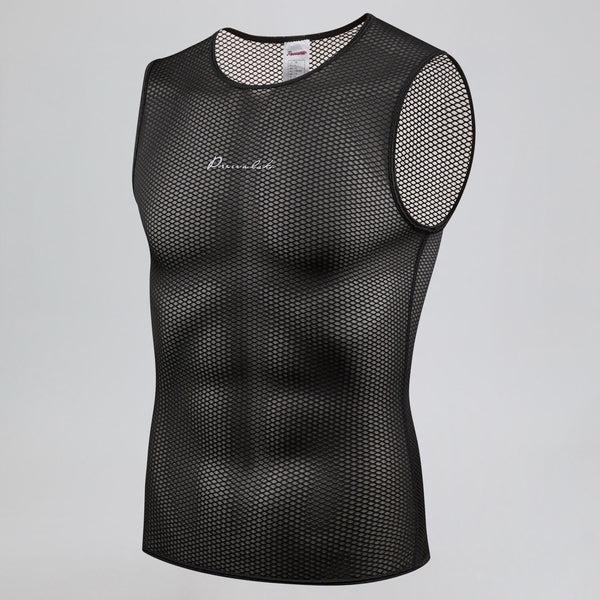
Przewalski Cycling’s current men’s base layer uses 88% polyester and 12% elastane jacquard mesh. Its low-compression fit is designed to stay close to the body without creating a restrictive feeling, making it suitable for wearing beneath other cycling layers.
How To Layer Base Layers For Men In Changing Weather
A useful layering system gives each garment a specific role. The base layer manages moisture next to the skin, while a jersey or mid-layer provides additional coverage. When wind or rain becomes a concern, a vest or jacket can be added on top.
Imagine starting an autumn ride early in the morning. The air may feel cool enough for a base layer and jersey, but after several miles of climbing, body temperature rises and the extra outer layer may no longer be necessary. A removable jacket or vest can be packed away while the base layer stays in place.
The reverse can happen during a descent. After working hard on a climb, the rider may still be sweating when increased airflow makes the temperature feel much lower. Keeping moisture under control can make that transition more comfortable.
Spring rides can require a similar approach. A lightweight sleeveless base layer can provide a close-fitting moisture-managing layer on a cool morning without adding much bulk under a jersey. It also adds less bulk underneath a jersey than a heavier thermal garment.
Choosing Materials For Transitional Riding Conditions
Material selection becomes especially important when temperatures are unpredictable. Polyester is commonly used in performance cycling clothing because it can move moisture away from the skin and dry relatively quickly. Elastane adds stretch and helps the garment follow the rider’s movements while maintaining a close fit.
The Men’s Essential Versatile Cycling Base Layer uses 130g/m² jacquard mesh. Its listed specifications include moisture absorption of at least 200% and a quick-dry rate of at least 0.25 g/h. The lightweight construction is intended for cycling and fitness training, making it suitable as part of a flexible layering system.
When comparing base layers for men, riders should consider their usual routes, pace, and weather rather than automatically choosing the warmest option. Someone taking relaxed rides around town may need less insulation than a cyclist who regularly tackles long climbs.
Small Details Can Make A Difference
Seasonal riding is not only about temperature. Shorter daylight hours can also affect when people ride. Early-morning commuters and evening cyclists may spend part of their journey in low-light conditions, making small visibility features useful.
The same base layer includes a 7×70 mm reflective chest detail for added visibility during early mornings, evenings, and other low-light situations. It is a relatively small feature, but one that fits the needs of cyclists who use their bikes regularly rather than only on sunny afternoons.
Care also matters when a base layer becomes part of a regular riding routine. Sweat and repeated washing can affect fabrics and elastic components over time, so following the manufacturer’s care instructions can help preserve the garment’s fit and performance.
Making Seasonal Layering Easier
Good layering does not require a complicated system. A breathable base layer can remain the foundation of an outfit while jerseys, vests, and jackets are adjusted according to the weather. This gives cyclists more flexibility when temperatures change during a single ride.
For everyday riders, that adaptability is often more useful than owning highly specialized clothing for every condition. A lightweight layer that works on a cool morning and underneath different outer garments can cover a surprisingly broad range of spring and autumn riding situations.
A Practical Base Layer Option From Przewalski Cycling
The Men’s Essential Versatile Cycling Base Layer is part of the core collection from Przewalski Cycling. Designed with lightweight open-mesh fabric and a low-compression fit, it effectively manages moisture to keep riders dry during variable weather conditions.
Seasonal layering revolves around regulating body temperature through simple gear adjustments. Positioning a breathable technical base layer next to the skin creates an active microclimate, allowing cyclists to manage wind and temperature shifts by pairing it with suitable outer jersey layers.
Its lightweight mesh construction, low-compression fit, moisture management, and reflective detail make it a practical option for riders dealing with changing conditions.
Seasonal layering is ultimately about making small adjustments before and during a ride. Starting with a comfortable layer next to the skin and adding outer pieces according to wind, temperature, and riding intensity can help cyclists stay comfortable without carrying unnecessary bulk.
