

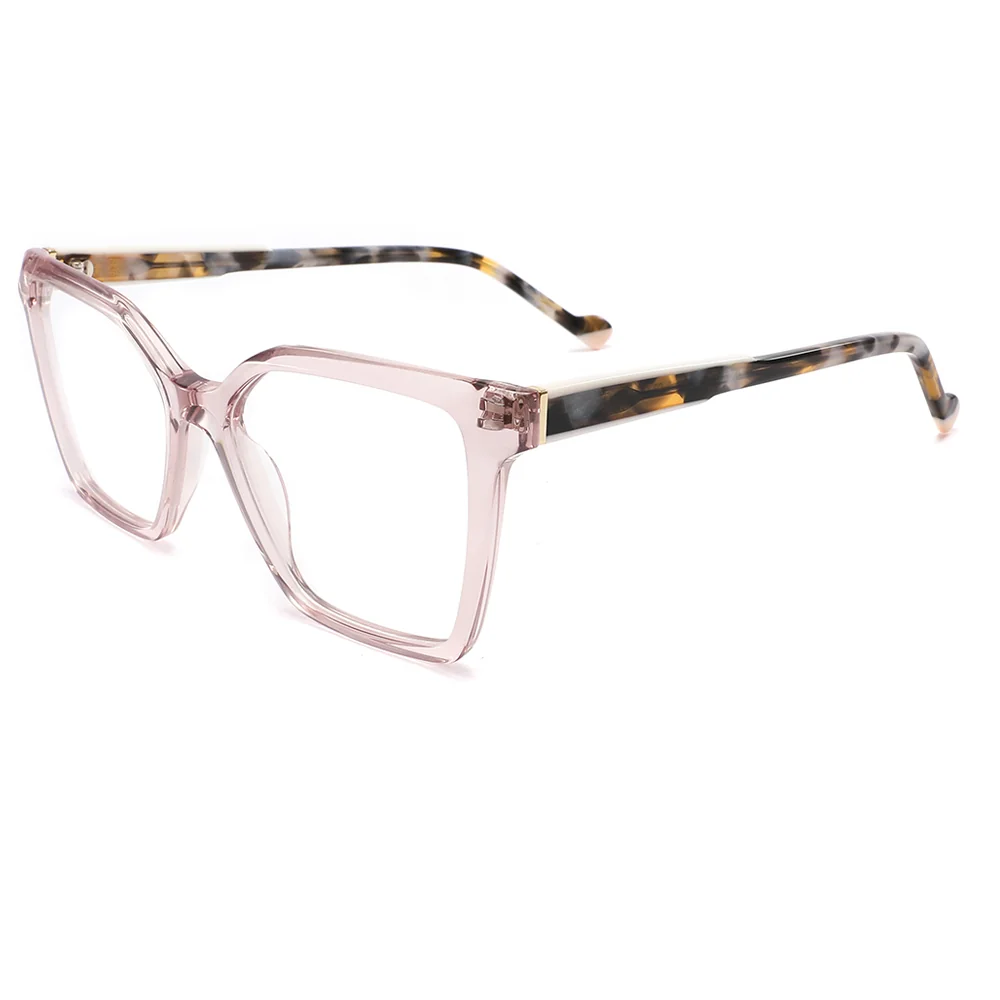
Dermatological reactions to eyewear materials frequently stem from continuous friction, localized moisture accumulation, and metal ion leaching against sensitive facial skin. Sourcing high-grade acetate glasses provides a reliable solution for consumers prone to contact dermatitis or nickel allergies. Examining the organic chemical composition of plant-derived cellulose reveals why bio-based optical polymers offer superior cutaneous compatibility compared to synthetic plastics.
Chemical Structure and Botanical Origin of Cellulose Acetate
Cellulose acetate originates from natural plant fibers, primarily renewable cotton linters and wood pulp. Chemical esterification converts raw plant cellulose into cellulose acetate flakes, which technicians react with acetic anhydride and plasticizers to form solid block sheets. Because the primary polymer chain derives from botanical organic matter rather than petroleum, the resulting compound exhibits high biocompatibility.
Combining organic cotton fibers with natural plasticizers minimizes reactive synthetic chemicals in the finished frame chassis. Optical distributors selecting premium acetate glasses benefit from offering hypoallergenic eyewear options that remain gentle on delicate nasal and temporal skin. Organic plant origins form the technical foundation for skin-friendly optical products.
Elimination of Heavy Metal Leaching and Nickel Sensitization
Nickel sensitization remains a primary trigger for allergic contact dermatitis in optical wearers using metallic frames. Sweating breaks down low-grade metal plating, causing microscopic nickel ions to migrate into skin pores and cause redness, itching, and skin irritation. Solid cellulose polymers contain no nickel, lead, or heavy metals, preventing metal-induced skin reactions.
Encapsulating internal structural components, such as metallic core wires or hinge plates, deep within the polymer matrix keeps reactive metals away from direct skin contact. Preventing direct metal exposure provides a comfortable wearing experience for sensitive skin types. Polymer encapsulation safeguards structural integrity while maintaining dermatological safety.
Lamination Mechanics and Multi-Layer Material Stability
Modern frame manufacturing utilizes thermal lamination to fuse distinct colored acetate sheets into complex multi-layered blocks. Heat and mechanical pressure bond individual layers into a solid chassis without relying on harsh chemical adhesives that could irritate sensitive skin. Fusing layers directly maintains structural stability while creating rich visual contrast.
Specifications featured in Acetate Laminated Optical Frames Bulk Supplier options highlight how metal-acetate laminated prescription frames combine metallic accents with protective acetate coatings. Bonding protective layers around structural metal core elements shields the skin from raw metallic parts. Precision lamination supports complex multi-color designs while preserving smooth, non-irritating frame surfaces.
Surface Porosity and Resistance to Bacterial Accumulation
High-density cellulose acetate exhibits extremely low surface porosity when processed under proper curing conditions. Non-porous surfaces prevent facial sweat, natural oils, and makeup from soaking into the frame body, where bacteria typically propagate. Maintaining surface cleanliness reduces micro-bacterial skin break-outs along the nose bridge and temporal touchpoints.
Multi-stage tumble polishing and hand finishing yield a glass-like surface smoothness across the entire frame exterior. Ultra-smooth surface textures minimize mechanical friction against epidermal tissue during daily head movements. Low surface roughness prevents localized chafing and red pressure marks.
Plasticizer Selection and Hypoallergenic Formulations
Integrating plasticizers into raw cellulose flakes increases flexibility, impact resistance, and frame malleability during optician fitting adjustments. Standard industrial plasticizers can occasionally migrate to the surface over years of wear, leaving a white film that causes mild skin irritation. High-grade optical manufacturing utilizes specialized bio-based or phthalate-free plasticizers to keep material properties stable.
Formulating raw sheets with non-toxic plasticizing agents prevents chemical leaching caused by body heat and facial sweat. Stable chemical bonding keeps plasticizers trapped inside the polymer matrix throughout the frame’s lifespan. Pure chemical formulations guarantee long-term skin compatibility.
Precision CNC Machining and Surface Polishing Protocols
Transforming laminated acetate blocks into ergonomic eyewear frames involves multi-axis CNC milling to shape lens grooves, bridge contours, and temple arms. Precise mechanical cutting prevents micro-fractures in the material, keeping structural surfaces dense and uniform. Dimensional accuracy guarantees even weight distribution across the nasal slopes.
Extensive polishing regimes at JHEYEWEAR combine multi-day barrel tumbling with hand-buffing using organic polishing compounds. Surface finishing removes microscopic tool marks, leaving a smooth finish that glides over skin without catching delicate tissue. Precise machining combined with thorough polishing enhances wearing comfort.
Flexible MOQ Parameters and OEM/ODM Customization Services
Deploying specialized hypoallergenic optical collections requires flexible manufacturing setups tailored to diverse wholesale buyers. Operational frameworks at JHEYEWEAR support minimum order quantities starting from 300 pieces per new order, which buyers can split into 100 pieces per color across up to 3 distinct colorways. Ready-stock styles with custom logo printing offer lower entry points starting from 300 pieces.
Complete OEM and ODM private label services enable global partners to customize frame dimensions, develop custom laminated colors, and design branded packaging structures. Access to a vast catalog featuring over 5,000 distinct styles spanning optical frames, reading glasses, sunglasses, and GRS-certified eco-friendly models simplifies line development. Flexible factory parameters allow emerging private label brands and optical chains to scale collections efficiently.
Compliance Certification and Global Export Clearance
Exporting commercial eyewear collections into international markets requires strict adherence to international safety standards and regulatory compliance. Factory operations hold ISO 9001, BSCI, SEDEX, and GRS certifications, backed by official CE and FDA product registration filings. Comprehensive laboratory test reports verify chemical non-toxicity, UV protection, and material safety.
Traceable supply chain documentation for GRS-certified recycled materials, alongside biocompatibility testing, simplifies customs import clearance across European, North American, and Asian optical markets. Robust compliance management minimizes regulatory risks for bulk importers. Structured manufacturing schedules deliver consistent order turnaround for international distribution networks.
Conclusion
Providing hypoallergenic optical collections requires careful attention to botanical cellulose sourcing, phthalate-free plasticizer selection, and non-porous surface polishing. Partnering with JHEYEWEAR connects wholesale distributors with specialized acetate lamination capabilities, flexible 300-piece MOQ options across multiple colorways, and comprehensive ISO-certified quality control. Utilizing bio-compatible materials and precise manufacturing protocols allows optical brands to supply durable, skin-friendly acetate glasses to global optical markets.
