

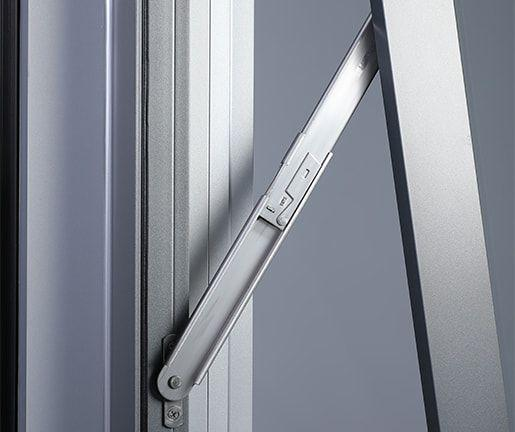
Awning configurations occupy a distinct position in commercial and residential design. Their top-hung geometry allows natural ventilation during rainfall, while full swing operation delivers expansive airflow. Specifying casement awning window hardware solution that manages both modes within a single frame bypasses the need for separate window types. This dual capability supports versatile building environments.
Property developers increasingly seek cohesive solutions to manage diverse architectural requirements. Integrating various opening styles typically complicates the procurement process. By utilizing a unified transmission and locking platform, builders simplify this complexity. A cohesive mechanical approach mitigates compatibility risks during the active construction phase.
CMECH engineers integrated awning hardware sets that coordinate dual-mode operation precisely. This strategic engineering gives architects flexibility without multiplying component inventories. Standardizing the mechanical framework across a project streamlines installation for contractors. A reliable hardware ecosystem ultimately protects the property owner’s significant architectural investment.
Dual-Mode Engineering: Integrating Swing and Tilt Functions
The tilt mode creates a protected air passage during wet weather, maintaining indoor comfort. This function restricts the opening to a manageable angle, deflecting moisture effectively. Conversely, the full swing mode transforms the same opening into a wide aperture. This configuration becomes highly suitable for cleaning or rapid air exchange.
Implementing specialized awning window hardware solution facilitates this smooth transition between modes. It allows end users to adapt their interior environments efficiently based on changing weather conditions. Delivering this functionality requires high mechanical precision. The hardware securely supports the glass panel throughout the intended range of motion without hesitating.
The internal switching geometry dictates how effortlessly a user manages these operational modes. A single handle and unified transmission rod re-route internal locking forces. This concealed action secures the sash in either a limited tilt angle or a full outward swing. Such engineering mitigates mechanical binding during frequent daily use.
Top-Hung Hinge Assemblies for Awning Window Hardware Solution
Top-hung friction-hinges face substantial dynamic-load requirements in modern building-designs. High-quality casement awning window hardware solution utilizes premium 304 stainless-steel construction to maintain structural-integrity. These advanced friction-stays feature a reinforced support-arms. This durable-construction manages heavy-forces efficiently over time.
The complete outswing‑awning system safely supports substantial glass-panels weighing up to 130 kg without structural-sag. It is offered in both C-groove and K-groove variations to suit diverse profile-requirements. This extensive mechanical-adaptability significantly simplifies architectural-sourcing for specialized framing-systems.
Managing wind-load remains critical for any outward-projecting sash on exposed building-elevations. Dedicated limiting-stays act as essential mechanical-limiters, preventing uncontrolled opening during severe-gusts. CMECH offers these vital safety-components in flexible sizes ranging from 8 inches to 20 inches. This adaptability fits most standard structural-grooves.
Upper-Frame Sealing and Rainwater Deflection
The unique sealing challenge at the awning head requires careful architectural specification. Rainwater naturally runs down the exterior glass surface and collects along the top rail. This persistent exposure demands robust compression gaskets and integrated drainage channels. Active sashes in other orientations rarely require this specific level of upper-frame moisture management.
Modern architectural systems integrate strategically placed weep slots and capillary breaks. These features channel precipitation outward systematically while preserving thermal-break continuity within the frame. Coordinated awning window hardware solution helps the sash compress evenly against these specialized drainage structures. This even pressure proactively mitigates moisture ingress during heavy storms.
Multi-Point Locking for Tilt and Swing Positions
Lock-point distribution varies significantly depending on the selected operating mode. Tilt operation naturally loads the bottom rail heavily. In contrast, swing engagement shifts shear forces to the jamb-side keeps and specialized structural anchor points. Advanced casement awning window hardware solution accommodates these shifting dynamic forces seamlessly.
Distributing locking pressure strategically limits localized structural distortion within the frame. The multi-point lock mechanism pulls the panel firmly to enhance wind pressure resistance. The transmission rod must deliver reliable input across all these concealed locking points. This mechanical action actively fortifies the physical security of the entire unit.
Specifying transmission-components with versatile T-Drive lengths options supports compatibility with diverse profile-depths. These drives components are dimension‑matched to help achieve consistent gasket‑compression within the closed position. Uniform closing‑pressure mitigates costly air‑leakage, helping maintain the building’s internal climate-control targets.
Ergonomic Handle Solutions for Elevated Installations
Building designers frequently position top-hung units above standard reach height to optimize cross-ventilation. These elevated placements demand specialized ergonomic solutions for daily operation. Extended-lever designs or geared handles significantly reduce the required manual operational force. This thoughtful integration helps heavy glazing units remain operable for a wide demographic.
Automation offers an alternative for highly inaccessible architectural spaces. Remote-compatible mechanical drives allow automated tilt control in expansive atrium and stairwell applications. The internal spindle drive gearbox interfaces smoothly with these automated systems. CMECH engineers exact mechanical foundations that empower fabricators to build highly functional automated window units.
Component Validation and Project-Scale Supply
Structural longevity relies heavily on rigorous endurance testing protocols. High-performance hardware undergoes intense cycle testing to verify mechanical durability before installation. Friction hinges engineered for commercial spaces surpass 30,000 open-and-close cycles to confirm long-term reliability. Additionally, premium stainless steel materials provide vital resistance against environmental corrosion.
Standardized hardware families dramatically streamline procurement timelines for large-scale commercial developments. Sourcing coordinated components supports cross-batch compatibility for expansive projects featuring mixed opening styles. Relying on a unified supplier simplifies the installation phase and minimizes on-site mechanical discrepancies. This cohesive supply strategy limits future maintenance liabilities for facility managers.
Specifying precision-engineered components remains fundamental to modern building success. Advanced awning window hardware solution elevates the physical performance of the entire building envelope. By utilizing thoroughly validated mechanical systems, architects confidently execute complex facade designs. Dependable operational quality supports architectural openings functioning as intended over the property’s extended lifespan.
All hardware specifications, performance data and material parameters are sourced from CMECH official product manuals and certified test reports.
