

Active avoidance studies rely on a clear relationship between conditioned cues, aversive stimuli, animal movement, and recorded responses. When comparing shuttle boxes, researchers need to look beyond the basic two-compartment design.
Stimulus control, movement detection, door operation, animal configuration, channel capacity, software functions, and data export can all affect how well the equipment fits the planned experiment. A well-planned shuttle box test should account for these factors from the outset.
Clarify the Active Avoidance Paradigm
In active avoidance, the animal learns to move from one compartment to another after a conditioned stimulus signals an upcoming aversive event. The movement itself forms part of the behavioral response.
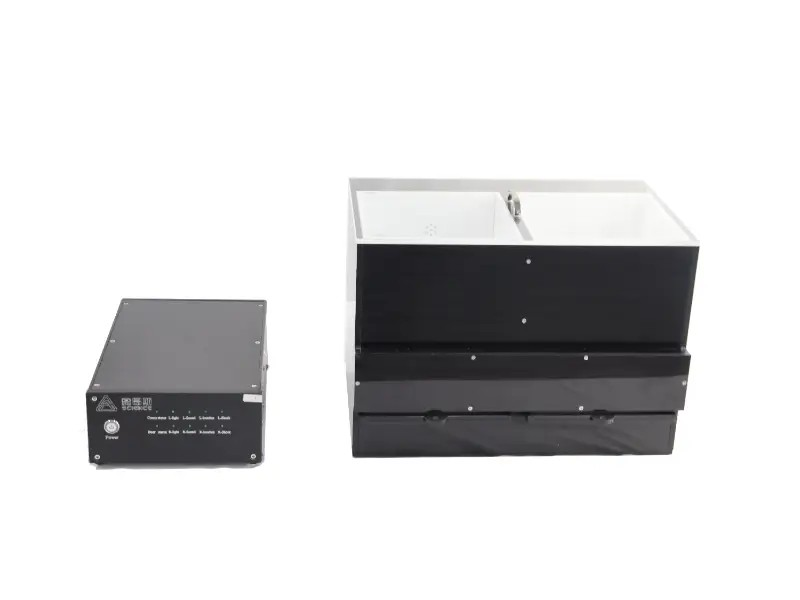
The SA223 Automated Shuttle Avoidance Test supports active avoidance and records measures including avoidance, escape, latency, and learning curve.
Before choosing equipment, outline the conditioned stimulus, unconditioned stimulus, timing sequence, response window, inter-trial interval, and primary outcomes. This creates a framework for comparing the functions provided by different systems.
Compare Stimulus Options in a Shuttle Box Test
Stimulus flexibility can be important when protocols use different conditioned cues. The SA223 provides independent sound, light, and electrical shock stimuli for its two chambers. Sound ranges from 100–40,000 Hz and 1–95 dB. Light control covers 0–400 lux with 1% resolution, while electrical shock ranges from 0.1–4.0 mA in 0.1 mA steps.
Scheduled start can also be set from 0–23 hours. These controls allow researchers to configure different stimulus sequences while keeping the selected parameters documented as part of the experimental protocol.
Examine Movement Detection
The ability to identify compartment transitions is central to an active avoidance experiment. The detection method should therefore be reviewed together with chamber design and software control.
The SA223 employs independent detection in each chamber to monitor movement and transitions in both rats and mice. Position detection uses dual visible and infrared light sources, and each chamber has independent signal detection and control—enabling separate monitoring of experimental events per channel.
Review Automatic Door Operation
Door movement can influence the timing and sequence of a shuttle trial. The SA223 incorporates an automatic door in each chamber, with software-controlled opening and closing. Door speed can be adjusted from 2–8 cm/s, and closing distance ranges from 1–10 cm. Opening and closing noise is specified at less than 65 dB.
Automated door control can reduce direct operator interaction during testing. Researchers should record the selected door settings and keep relevant parameters consistent within the experimental groups being compared.
Match the Chamber to the Animal
Species and chamber dimensions should be considered before ordering. The SA223 is available for both mice and rats. Its shuttle box interior measures 20 × 20 × 20 cm for mice and 25 × 25 × 30 cm for rats, with different external dimensions for the two configurations.
The chambers have grid floors and top-loading access. An optional sound-attenuating cubicle is also available, with a listed sound level below 40 dB. These physical details can be relevant when researchers assess space, access, visibility, and surrounding laboratory noise.
Consider Throughput and Protocol Flexibility
Laboratories handling multiple cohorts may need several chambers operating within the same experimental period. The SA223 supports up to 32 independent rodent chambers, and different chambers can run different protocols simultaneously. Its integrated software includes shuttle, passive avoidance, and learned helplessness paradigms.
This capacity can be useful when different groups require separate schedules or when a laboratory wants one platform to support several related behavioral paradigms. Channel requirements should be considered alongside cohort size and available laboratory space.
Check Data Recording and Export
A shuttle box should fit the laboratory’s data workflow as well as its behavioral protocol. The SA223 records active-avoidance variables such as avoidance time, avoidance, escape time, escape, no response, pretrial time, latency, duration, and start and end times. Data can be exported in CSV format for further analysis.
The system provides independent software control for each channel, allowing separate protocol settings for different chambers. This can be useful when several experimental groups are being tested under different schedules on the same platform.
Evaluate the Manufacturer and Support
BioMed Easy Technologies operates as a subsidiary of SANS Biotechnology and develops laboratory animal and neuroscience research equipment. Its portfolio covers Motor Coordination, Pain and Inflammation, Learning & Memory, Anxiety, Fear & Emotion, Reward & Addiction, and additional behavioral categories.
Its official website also lists CE and ISO9001 certifications and support for 3,000+ laboratories globally.
The SA223 adds automated chamber doors, configurable sound, light, and shock stimuli, independent behavioral detection, multi-channel operation, and CSV data export.
When comparing equipment for active avoidance, consider the stimulus range, movement detection, door control, animal configuration, channel capacity, and software requirements together.
The SA223 is available in mouse and rat versions and also supports passive avoidance and learned helplessness. BioMed Easy can advise on configuration, support, training, and after-sales service when a laboratory selects a shuttle box workflow.
