

Medical patches and skin-contact adhesive products require a sound balance between reliable adhesion and user comfort. Unlike general industrial adhesives, medical adhesive systems must maintain attachment while considering factors including skin compatibility, long-term contact, and formulation stability.
A biocompatible tackifier plays an important role in these systems by adjusting adhesive properties such as tack, compatibility, and bonding behavior. As a specialized rosin ester material, glyceryl rosinate can serve as a tackifying component in medical adhesive formulations when combined with suitable pressure-sensitive adhesive polymers. (komotac.com)
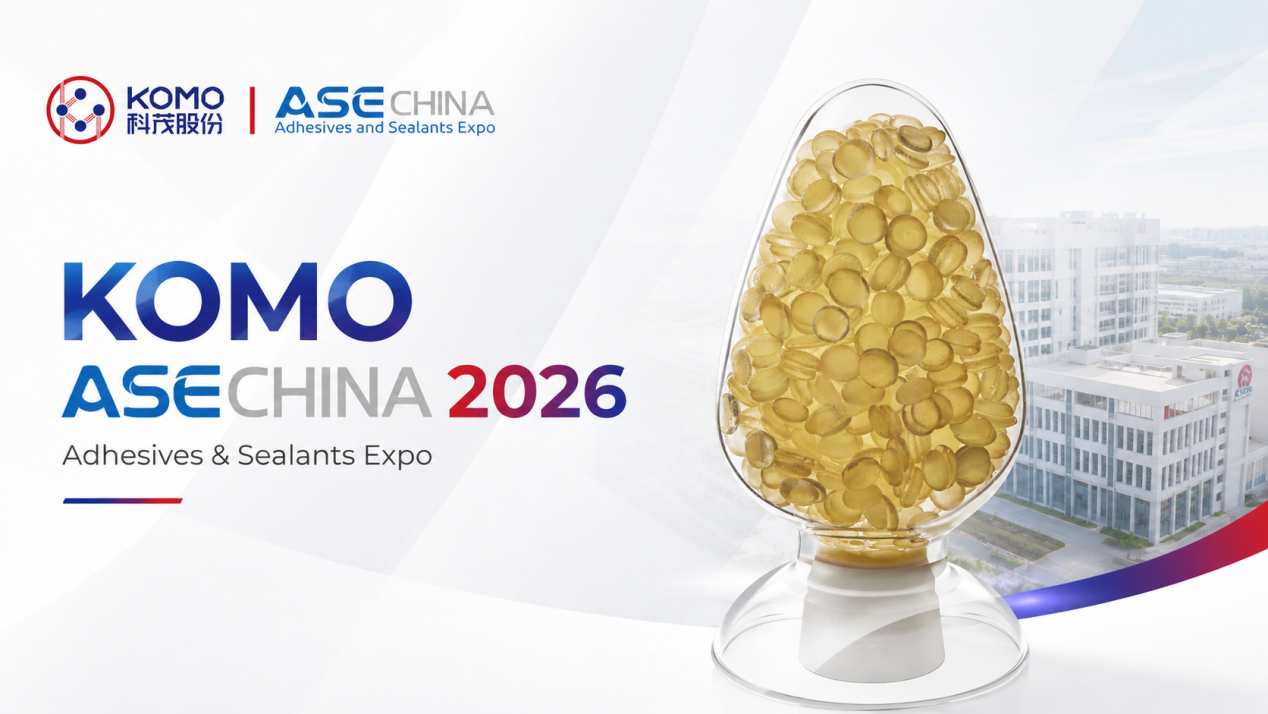
KOMO will participate as an exhibitor at China Adhesives Expo, where industry professionals can visit Booth E1562 to discuss rosin-based adhesive materials and formulation requirements.
Why Medical Adhesive Formulations Need Specialized Tackifiers
Medical patches, surgical tapes, and wound-care products are designed for direct contact with skin. Their adhesive systems need to achieve sufficient holding performance while avoiding unnecessary discomfort during use.
A tackifier does not function as the primary adhesive polymer. Instead, it modifies the behavior of the adhesive system by improving tack, adjusting viscoelastic properties, and supporting compatibility between different formulation components.
For medical applications, the selection criteria are different from conventional industrial adhesives. Formulators need to consider not only adhesion strength but also material safety, odor, stability, and consistency.
The Role of Glyceryl Rosinate in Medical Adhesives
Glyceryl rosinate is a modified rosin derivative produced through the esterification of refined natural rosin with glycerol. This chemical modification changes the characteristics of the original rosin material and creates a resin suitable for specialized adhesive formulations. (komotac.com)
KOMO’s KA100NC biocompatible rosin ester is designed as a tackifying resin for medical adhesives, hygiene products, cosmetics, and EVA adhesive applications. The product information states that both KA100NC and its formulated SIS pressure-sensitive adhesive have passed biocompatibility tests required for medical tapes, including cytotoxicity, skin irritation, and skin sensitization evaluations. (komotac.com)
This makes glyceryl rosinate a material option for formulators developing skin-contact adhesive systems.
How Tackifier Chemistry Influences Patch Performance
The performance of a medical patch depends on the interaction between the tackifier, polymer, and other formulation components.
A suitable tackifier can help improve:
- Initial adhesion to the skin
- Adhesive contact during wear
- Compatibility with pressure-sensitive adhesive polymers
- Processing consistency
However, increasing tackifier content does not automatically create better performance. Too much resin may affect cohesion, residue behavior, or long-term stability. The correct formulation balance depends on the adhesive polymer, application requirements, and target product design.
For this reason, medical adhesive developers evaluate tackifier selection as part of the complete formulation rather than as an isolated material choice.
Why Skin Compatibility Matters in Medical Patch Materials
Traditional rosin-based tackifiers may require additional purification and modification when used in sensitive applications. Medical adhesive formulations need raw materials with controlled properties because the adhesive remains in contact with skin.
KOMO’s biocompatible rosin ester is developed from refined natural rosin and is positioned for medical adhesive applications where biocompatibility requirements are important. The product specification for KA100NC includes a softening point of 98–106°C, Gardner solid color of ≤1, acid value of ≤10 mg/g, and melt viscosity of 800–1850 cP at 150°C. (komotac.com)
These specifications help formulators evaluate the resin’s processing characteristics during material selection.
Compatibility With Medical Pressure-Sensitive Adhesive Systems
Medical patches commonly rely on pressure-sensitive adhesive technology. The tackifier must work together with the main polymer system to achieve the required balance between adhesion and cohesion.
KOMO’s KA100NC is compatible with medical adhesive formulations based on SIS pressure-sensitive adhesive systems. The company’s product information highlights its application in medical tapes, surgical tapes, wound dressings, and other hygiene adhesive products. (komotac.com)
For formulators, compatibility testing remains essential because the final adhesive performance depends on the complete formulation.
Selecting a Biocompatible Tackifier for Medical Applications
When evaluating a biocompatible tackifier, medical adhesive manufacturers usually consider several factors:
1.Biocompatibility requirements
2.Polymer compatibility
3.Tack and adhesion balance
4.Processing temperature
5.Color and odor requirements
6.Batch consistency
A suitable resin should support the overall adhesive design rather than optimize only one property.
KOMO provides rosin-derived tackifying materials as formulation ingredients rather than finished medical patches or tapes. This upstream role allows adhesive manufacturers to evaluate resin characteristics according to their own product requirements.
Meet KOMO at China Adhesives Expo Booth E1562
China Adhesives Expo provides a platform for adhesive industry professionals to exchange technologies, explore raw materials, and discuss formulation solutions.
At Booth E1562, KOMO will introduce its rosin-based adhesive materials, including biocompatible rosin ester products for medical adhesive applications.
Visitors can discuss topics such as:
1.Medical adhesive tackifier selection
2.Glyceryl rosinate applications
3.Pressure-sensitive adhesive formulation requirements
4.Resin specification evaluation
For companies searching for KOMO, the focus is on upstream resin materials that support adhesive manufacturers in developing specialized products.
Supporting Next-Generation Medical Adhesive Development
Medical adhesive performance depends on many factors, including polymer selection, formulation design, processing conditions, and raw-material quality.
A biocompatible tackifier such as glyceryl rosinate provides formulators with another option for balancing adhesion performance and skin-contact requirements.
With rosin-based resin expertise, KOMO supports adhesive manufacturers looking for specialized materials for medical patches, tapes, and hygiene adhesive systems. At China Adhesives Expo Booth E1562, industry professionals can explore how modified rosin esters contribute to the development of more reliable medical adhesive formulations.
