

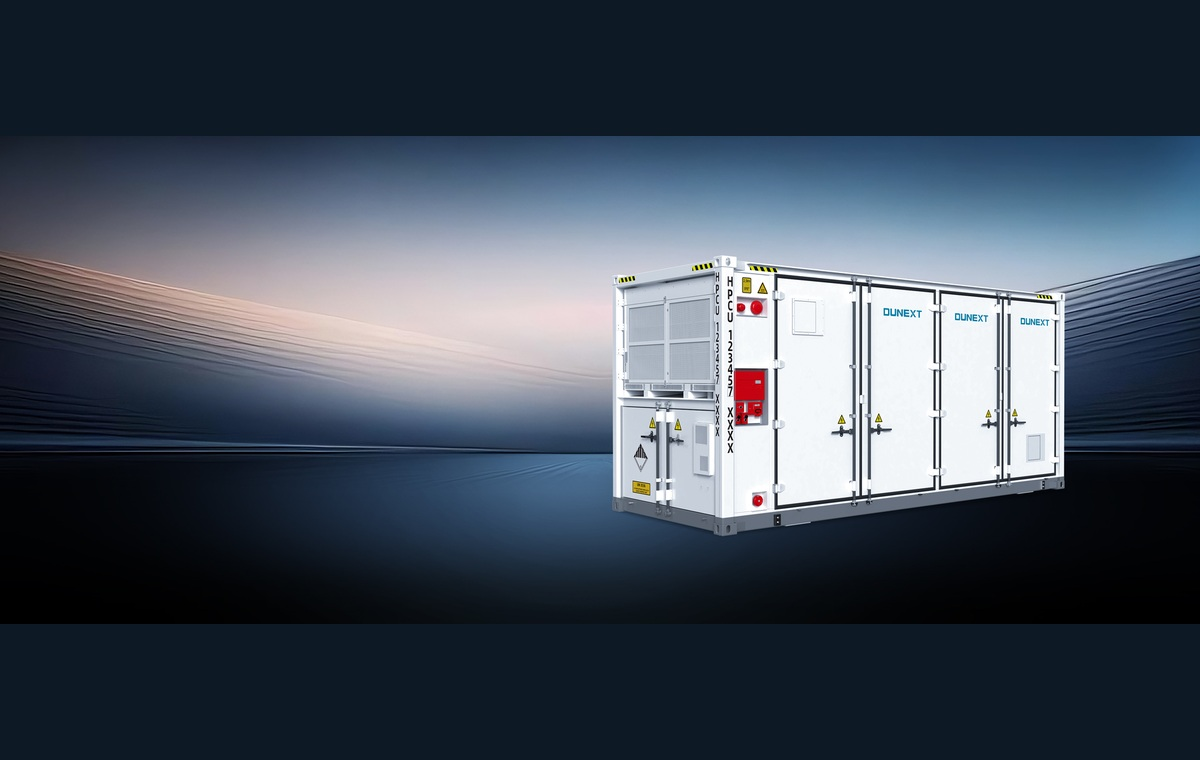
Containerized BESS procurement concentrates several technical decisions into a single physical package. Energy capacity, conversion power, cooling, safety, structural layout, installation interfaces, and grid connection all have to work together at project scale.
The right bess container manufacturer is therefore the one whose product architecture can be matched to the project’s electrical duty and deployment constraints, with enough technical detail to verify that match before equipment reaches the site.
Translate Project Requirements Into Container Ratings
Energy and power ratings form the electrical baseline for matching a container to its intended project duty. A system intended to deliver large amounts of energy over several hours needs a different balance between capacity and power than one focused on shorter, higher-power operation.
Both figures are needed because capacity alone does not describe how quickly the stored energy can be delivered. The project’s expected dispatch profile, grid connection, and operating duration define whether the proposed configuration is appropriate. Project teams can then compare candidate systems on the same duty basis rather than treating nominal megawatt-hours as a complete description of performance.
PowerMount 5MWh gives a concrete example of this relationship. Dunext specifies 5,015 kWh of battery capacity, 2,500 kW standard charge/discharge power, and LiFePO4 314Ah cells. Together, these values define a specific energy-to-power profile that a general “5 MWh class” label cannot show.
A bess container manufacturer that supplies this level of detail makes it easier to test the product against planned duty cycles and grid-side requirements before detailed engineering proceeds.
Read Efficiency at the System Level
A container includes more than the battery rack, and each energy-conversion stage affects how much stored electricity is ultimately available outside the system. Conversion equipment, thermal management, auxiliary loads, cabling, and internal distribution all contribute to total loss. The useful efficiency figure therefore has to describe the integrated system, since an isolated component may operate under different test conditions.
Dunext states system efficiency of at least 94% for PowerMount 5MWh. The unit also incorporates an integrated 2.5 MW booster and inverter arrangement. For a bess container manufacturer, integration of the principal battery and power-conversion elements can reduce the number of interfaces that have to be engineered separately on site.
It also gives project teams a clearer boundary for evaluating how the complete container converts and delivers energy. The more functions included inside that boundary, the more important it becomes to understand the efficiency figure as a property of the integrated product.
Physical Integration Influences Construction Work
Utility projects have to turn equipment specifications into foundations, cable routes, lifting plans, clearances, and commissioning sequences. Container dimensions therefore have direct consequences for layout and construction. PowerMount 5MWh measures 6,058 × 2,438 × 2,896 mm, placing a large storage capacity within a standard containerized format.
A bess container can only be considered compact in a useful sense if the site can accommodate its footprint, access needs, and electrical connection arrangement.
Dunext highlights compact deployment and simplified installation as design elements of the PowerMount configuration. Integrating major subsystems inside the product reduces the amount of interface work left for field assembly. That does not remove the need for project-specific civil and electrical engineering, but it changes where that work occurs.
A more integrated container can reduce field coordination between separately supplied battery and conversion packages, while foundations, cables, protection settings, and plant controls still require site-specific design. The bess container manufacturer takes responsibility for more of the internal integration, while the project team can focus more clearly on site connection and plant-level coordination.
Safety and Cooling Need to Match the Stored Energy
PowerMount 5MWh is presented with comprehensive safety and precision liquid cooling among its principal design characteristics. Those features belong in the manufacturer assessment because they influence whether a high-capacity system can remain controlled during routine operation and abnormal conditions.
The relevant question for a bess container manufacturer is how those functions are engineered into the integrated product rather than added as disconnected components after the battery configuration has already been fixed. Safety review is therefore strongest when it follows the actual architecture of the container from cells through thermal and electrical systems.
As container capacity rises, the consequences of poor thermal control or fault management also become more significant. Large battery arrays need a design that limits temperature variation and uses coordinated safety measures across the system. Cooling, detection, isolation, structural protection, and electrical controls matter as an organized safety architecture, not merely as separate features listed on a datasheet.
A useful final comparison is not a feature count but a map between project requirements and container design. PowerMount 5MWh supplies measurable reference points—5,015 kWh capacity, 2,500 kW standard power, LiFePO4 314Ah cells, at least 94% system efficiency, defined dimensions, and an integrated 2.5 MW booster/inverter arrangement.
Those specifications make comparison possible, but the final decision still depends on whether the complete architecture fits the intended duty, site layout, grid connection, and risk controls. Manufacturer selection becomes stronger when every major product claim can be tested against a project requirement rather than accepted as a standalone feature.
