

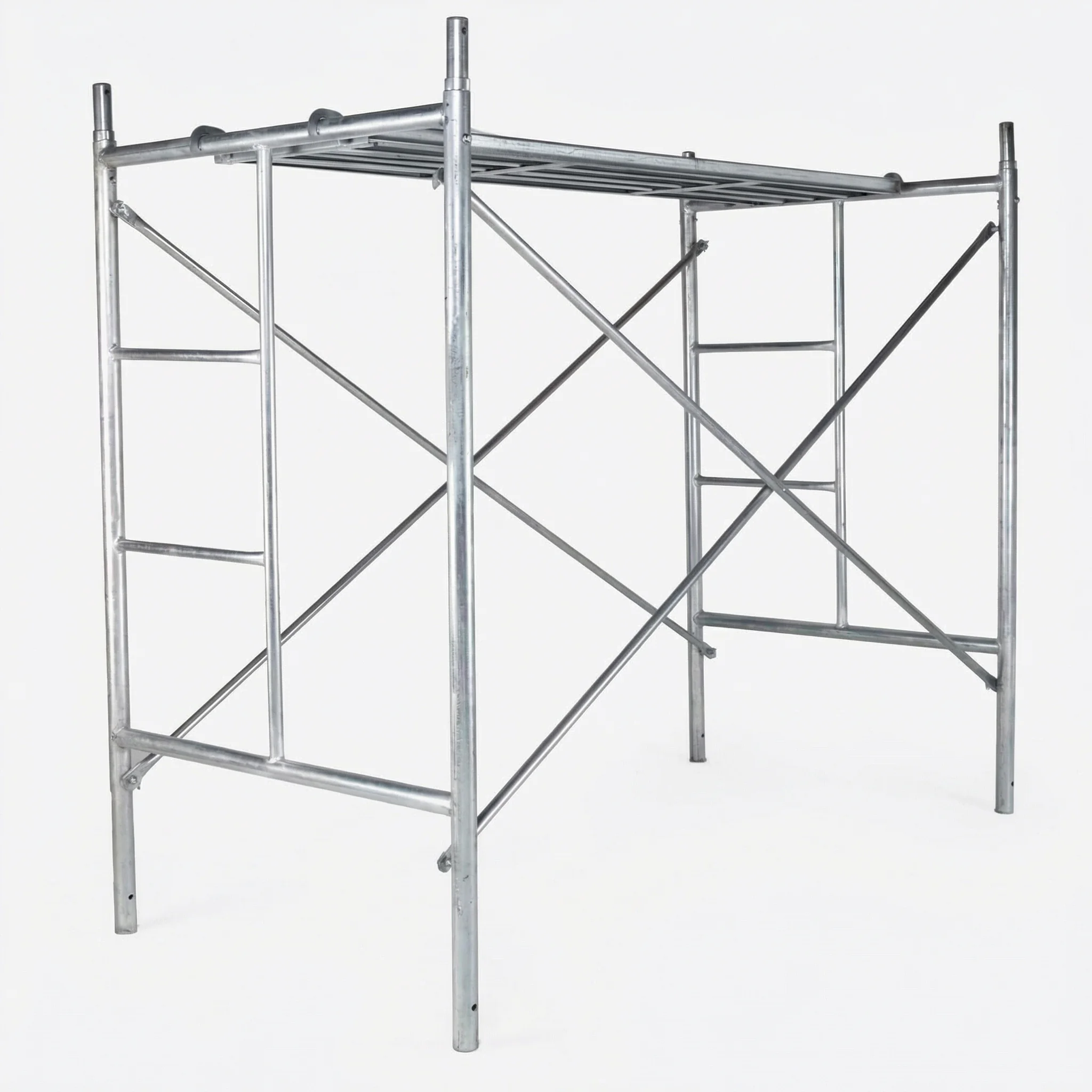
Adapting temporary elevation systems to shifting ground surfaces and diverse architectural shapes demands careful consideration of physical equipment configurations. Commercial masonry projects, residential renovations, and industrial finishing tasks rely heavily on structural setups that balance swift assembly with dependable load bearing.
Utilizing a standardized frame scaffolding configuration allows site managers to erect predictable work decks across varied terrain while maintaining rigid structural stability throughout multi-tier builds. Evaluating key engineering parameters—such as tube diameter, locking pin mechanics, and surface treatment resilience—helps technical teams select optimal equipment layouts for complex site environments. Procurement specialists sourcing certified temporary frameworks from reputable manufacturers like Rongze prioritize standardized material specifications to maintain jobsite safety standards across all operational phases.
Ground Surface Adaptability and Base Support Mechanisms
Uneven terrain, uncompacted soil, and sloping city sidewalks pose immediate structural challenges during initial base frame placement. Distributing concentrated vertical loads effectively requires pairing lower upright posts with heavy-duty base plates or leveling screw jacks. Threaded leveling jacks compensate for ground slope variations, allowing installation crews to establish precise horizontal alignment across the bottom tier without placing unstable wooden shims under the standards.
Maintaining strict vertical alignment prevents eccentric loading forces from twisting primary vertical posts under heavy material loads. When base supports rest on soft ground, wide base plates diffuse downward axial forces over broader surface areas to prevent localized sinking or tilting. Proper foundation leveling safeguards the structural integrity of upper framing tiers, allowing subsequent levels to connect seamlessly without forced alignment.
Structural Geometry and Load Capacities
Geometric design determines how well individual framing units absorb static dead weights and dynamic live loads on active job sites. Main vertical posts constructed from high-yield carbon steel tubes provide primary compression strength, while horizontal cross-members support intermediate working platforms. Integrating diagonal cross braces across adjacent bays transforms independent vertical frames into a cohesive, rigid box matrix capable of resisting lateral wind loads.
Selecting the appropriate scaffolding frame width depends on required working deck clearances and intended trade applications. Walk-through designs provide open passageways along the platform deck, allowing workers to transport tools and mortar tubs freely without tripping over structural crossbars. Masonry setups feature heavy-duty cross-members engineered to support stacked brick pallets alongside site personnel, ensuring uniform weight distribution down to ground foundations.
Locking Pin Dynamics and Assembly Efficiency
Installation speed and site labor costs depend directly on the mechanical design of connection hardware joining vertical tiers and diagonal bracing. Traditional bolt-and-nut assemblies require manual wrenching, which slows down erection sequences and increases labor hours during multi-tier builds. Modern prefabricated systems employ gravity-activated drop locks, flip locks, or fast-acting spring pins that secure cross braces instantly without requiring specialized hand tools.
Accelerated assembly mechanisms allow site crews to advance working platforms rapidly in sync with rising wall construction. Clear visual indicators on gravity drop locks enable safety inspectors to verify connection integrity quickly before authorizing trade personnel onto elevated decks. Disassembly procedures offer similar time savings during site demobilization, allowing components to be struck, sorted, and stacked neatly for freight transport without damaging locking pins.
Surface Finish Resistance and Environmental Protection
Continuous exposure to outdoor humidity, rain, salt air, and chemical masonry cleaners threatens structural steel with progressive rust degradation. Unprotected carbon steel oxidizes rapidly, causing internal wall thinning that diminishes total load-bearing capacity over repeated deployment cycles. Applying a hot-dip galvanized coating seals both internal and external tube surfaces with a durable zinc layer that shields raw metal against aggressive environmental elements.
Alternative protective finishes, such as powder coating or industrial paint, provide basic surface protection against light atmospheric exposure. However, mechanical impacts during transport and site handling often chip painted surfaces, exposing underlying steel to localized corrosion. Investing in hot-dip galvanized components preserves nominal wall thicknesses over extended operational lifecycles, maintaining structural performance across challenging outdoor construction projects.
Facade Integration and Anchorage Systems
Securing tall access towers against external walls prevents tipping caused by strong wind gusts or dynamic worker movements on upper levels. Mechanical tie-ins fixed to concrete slabs or structural wall anchors transfer lateral forces directly into the main building mass. Spacing wall ties at calculated vertical and horizontal intervals maintains overall frame verticality as total tower heights increase.
Complex building facades featuring decorative overhangs, recessed window wells, or irregular balconies require adaptable tie-in configurations. Outrigger brackets and cantilevered side brackets extend working decks outward from primary upright posts, providing trade crews with close, ergonomic access to wall surfaces. Properly calculated anchorage layouts preserve spatial stability, preventing framework sway during heavy material staging operations.
Key Selection Criteria Summary
Selecting appropriate temporary access equipment requires evaluating ground substrate stability, expected load distributions, assembly mechanics, and environmental exposure levels. High-strength carbon steel tubing protected by hot-dip galvanization preserves nominal load capacities against severe atmospheric corrosion over long deployment cycles.
Utilizing an authentic Frame Scaffolding layout featuring intuitive locking mechanics accelerates erection workflows while maintaining rigid structural stability across diverse building perimeters. Sourcing standardized temporary access inventory from established suppliers like Rongze provides global contractors with certified load ratings, streamlined site logistics, and dependable structural safety across multi-phase commercial builds.
