

Gas hazards can emerge suddenly in manufacturing plants, chemical facilities, refineries, warehouses, mines, and other industrial workplaces. A reliable detection strategy helps organizations identify dangerous concentrations before they develop into fires, explosions, poisoning, or oxygen-deficient conditions.
For facility managers, one important decision is whether to use fixed detection equipment, personal monitors, or a combination of both. Although these systems serve different purposes, they can complement each other as part of a broader workplace gas safety program.
Fixed and Personal Gas Detector Systems Serve Different Roles
A fixed gas detector is permanently installed at a selected location where gas leakage may occur. Typical installation points can include pipelines, storage areas, process equipment, chemical handling zones, and other locations identified through a site risk assessment.
Fixed systems are designed for continuous monitoring of specific areas. Depending on the system architecture, detection terminals can transmit concentration information to a controller or management system, allowing operators to monitor conditions and respond to alarms.
A personal detector, by comparison, is carried by an individual worker. It provides localized monitoring around the person wearing the instrument. This is particularly useful when workers move between different areas or enter locations where atmospheric conditions can change.
OSHA notes that direct-reading monitors can be used to detect toxic gases, oxygen-deficient atmospheres, and combustible conditions, including in confined spaces and other potentially hazardous workplace environments.
When Should a Facility Use Fixed Gas Detection?
Fixed detection is particularly valuable when a facility has predictable, stationary sources of gas risk. Installing detectors close to potential leak points can provide continuous surveillance without requiring workers to manually check every location.
For example, an industrial site may install fixed detectors around gas pipelines, storage tanks, cylinder areas, or chemical handling points. The appropriate detector type and placement depend on the gases involved, potential release points, ventilation patterns, and site-specific risk assessment.
A fixed system can also become part of a broader emergency response arrangement. Industrial gas monitoring solutions may combine detection terminals with control equipment, alarms, ventilation, and other safety functions. This approach can help organizations establish a structured response when concentrations exceed defined alarm levels.
However, fixed equipment has an important limitation: it monitors designated locations rather than following individual workers. A person entering another area may therefore require additional protection.
When Is a Personal Gas Detector the Better Choice?
Personal monitoring is valuable when workers are mobile or when atmospheric hazards can vary substantially between work areas. Maintenance technicians, inspection personnel, confined-space workers, and other employees may encounter changing gas conditions during their activities.
A portable instrument can travel with the worker and provide immediate alarms when monitored conditions reach configured thresholds. Depending on the model, alarms may include audible, visual, and vibration notifications.
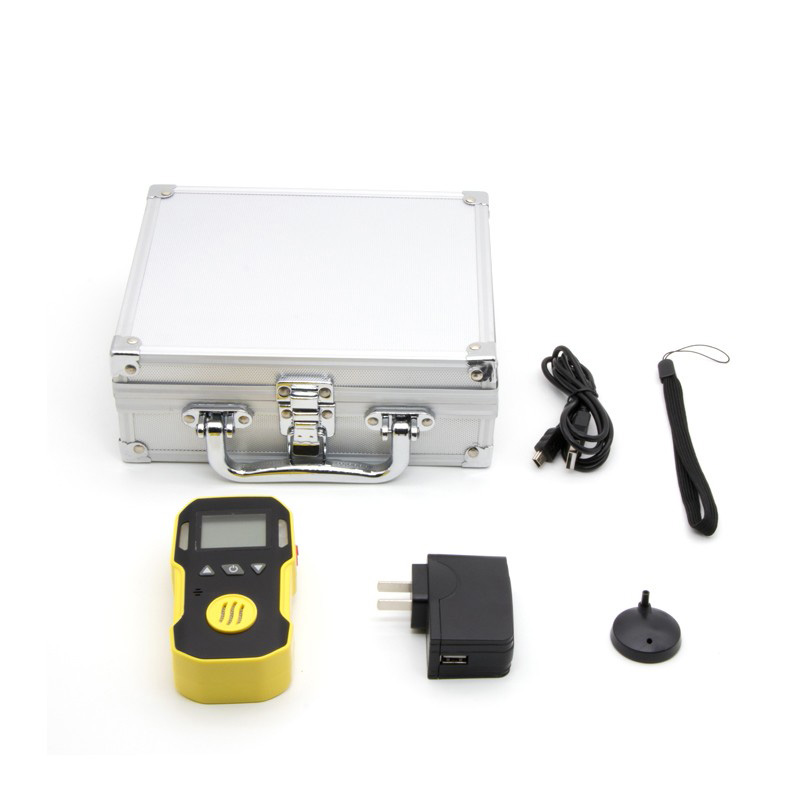
For example, the BH-90A portable single-gas detector from Bosean Tech provides audible, visual, and vibration alarms. Its specifications include a response time below 30 seconds, a working time of at least eight hours, and a sensor life of two years. The product weighs approximately 130 g including the battery and has dimensions of 100 × 60 × 30 mm.
These characteristics make portability an important consideration when selecting equipment for workers who need continuous personal monitoring throughout a shift.
Gas Detector Selection Should Start With the Hazard
The most important selection factor is the gas that needs to be detected. Different workplaces may face combustible gases, toxic gases, oxygen deficiency, or multiple hazards simultaneously.
A facility should identify the gases that could realistically be released before choosing equipment. It should also consider the expected concentration range, environmental conditions, required alarm functions, and whether workers or fixed assets are being protected.
For workplaces with multiple hazards, a multi-gas Gas Detector may be more appropriate than a single-gas instrument. Bosean Tech offers portable multi-gas models capable of monitoring combinations such as combustible gas, oxygen, carbon monoxide, and hydrogen sulfide, depending on the specific model.
Environmental conditions also matter. Temperature, humidity, dust, water exposure, and hazardous-area requirements can affect which instrument is appropriate.
Why Facilities Often Need Both Types
Choosing between fixed and personal detection does not always have to be an either-or decision. In complex industrial environments, the two approaches can address different layers of risk.
Fixed detectors can continuously watch critical locations while personal monitors protect workers as they move through the facility. If an incident occurs away from a fixed monitoring point, a personal device can provide an additional warning for the employee exposed to the changing atmosphere.
This layered strategy is especially relevant for operations where workers routinely move between production zones, maintenance areas, confined spaces, storage locations, and other potentially hazardous environments.
The key is to design the detection strategy around the facility’s actual hazards rather than selecting equipment based only on price or detector type.
Check Maintenance and Calibration Requirements
Detection performance depends on more than the initial purchase. Gas monitoring instruments require appropriate testing, calibration, maintenance, and sensor management.
OSHA recommends following the manufacturer’s instructions for testing and calibration of direct-reading monitors because proper maintenance helps maintain reliable measurements.
