

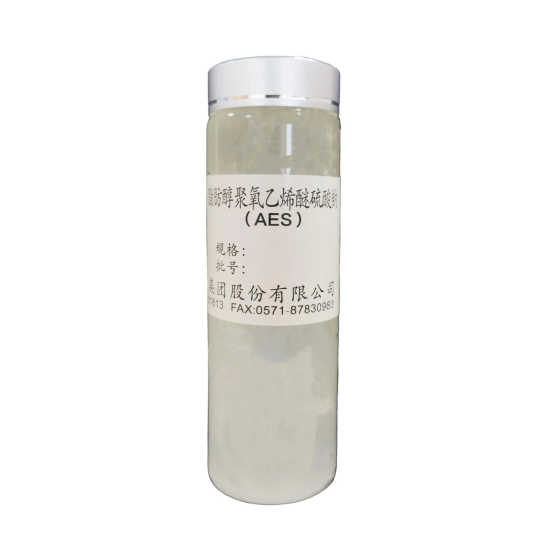
Sodium Lauryl Ether Sulfate (SLES) is a core anionic surfactant widely applied in daily chemical and industrial fields, renowned for stable cleaning, foaming, emulsifying and wetting properties. In the commercial market, SLES is mainly circulated in two mainstream concentrations: 70% high-concentration concentrate and 28% low-concentration ready-to-use solution. Professional Sodium Lauryl Ether Sulfate suppliers provide targeted product solutions for different production scenarios, while reliable SLES suppliers help downstream enterprises accurately select materials to optimize formulation cost and product performance. As a well-known brand in the industry, Zanyu delivers standardized SLES 70% and 28% products with stable quality, complying with industrial safety and environmental protection standards, and has become a preferred cooperative brand for many downstream manufacturers.
Performance and Physical Characteristic Differences Between SLES 70% and 28%
From the perspective of professional Sodium Lauryl Ether Sulfate suppliers, the fundamental difference between SLES 70% and 28% lies in active ingredient content and physical state, which directly determines their usage characteristics. SLES 70% is a high-purity concentrated product with high viscosity and strong active substance content. It features outstanding thickening performance and high formulation flexibility, and can maintain stable activity in both soft and hard water environments. However, this concentrated product requires standardized dilution operation before use, and improper dilution may cause gel agglomeration and affect formulation uniformity. In contrast, SLES 28% is a pre-diluted aqueous solution with low viscosity and good fluidity. It requires no complex pretreatment and boasts uniform and stable properties. Both grades of Zanyu SLES feature the inherent benefits of low irritation and high biodegradability, which can well satisfy safety standards for household and industrial formulations. Professional SLES suppliers keep tight control over product purity, pH value and stability of these two grades, help maintain stable performance across batches.
Applicable Scenarios and Industrial Selection Suggestions from SLES Suppliers
Major Sodium Lauryl Ether Sulfate suppliers have formed mature selection guidelines based on long-term market service experience. SLES 70% is more suitable for large-scale industrial production and high-efficiency formula preparation. It is widely used in heavy-duty detergents, washing powder, textile printing and dyeing, leather treatment and industrial cleaning fields. Its high concentration effectively reduces transportation and storage costs for enterprises, and its strong detergency and emulsifying power can meet high-standard industrial decontamination demands. Zanyu’s SLES 70% product, with stable active content and excellent water resistance, is favored by industrial manufacturers. SLES 28%, as a ready-to-use product, is mainly applied in civilian daily chemical products, including shampoos, hand washes, bubble baths and dishwashing liquids. It has mild properties, fine and rich foam, and will not damage the mild formula system of daily chemicals. For small and medium-sized daily chemical enterprises, SLES suppliers generally recommend choosing 28% specifications to simplify production processes and reduce equipment and labor costs.
Precise SLES Concentration Selection for Maximized Formulation Value
The selection of SLES 70% or 28% should be based on production scale, product positioning and cost control demands, and professional Sodium Lauryl Ether Sulfate suppliers can provide customized matching solutions. Large-scale industrial manufacturers with mature dilution processes are recommended to adopt SLES 70% to reduce comprehensive costs while ensuring product performance. Small and medium-sized daily chemical enterprises and brands focusing on mild and convenient formulas are more suitable for SLES 28% to stabilize product quality and simplify production links. As a professional SLES supplier, Zanyu strictly controls the production standards of the two specifications of products, with reliable product compatibility, safety and environmental protection, helping downstream enterprises balance performance, cost and safety. In actual production, cooperating with formal Sodium Lauryl Ether Sulfate suppliers and selecting specifications scientifically is the key to optimizing formula quality and improving market competitiveness.
