

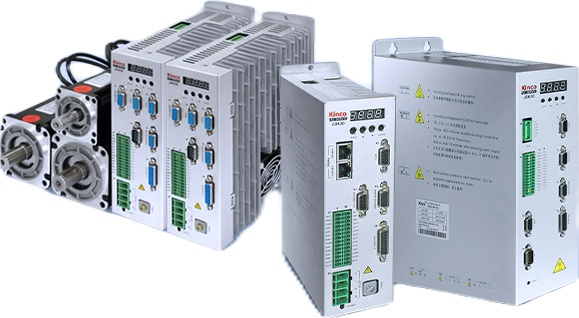
Brushless AC servo drives are widely used in industrial equipment that requires controlled speed, precise positioning, and coordinated motion. They work with compatible servo motors and feedback devices to regulate movement according to machine commands. For equipment manufacturers, choosing a suitable drive involves understanding the application’s cycle, load characteristics, accuracy requirements, and communication needs.
An AC servo drive can support different production processes when its ratings and control functions match the machine. The following ten applications illustrate where brushless servo systems contribute to industrial motion control.
- Packaging and Slitting Machinery
Packaging equipment often coordinates feeding, cutting, sealing, and product transfer within short production cycles. Servo control allows these movements to follow programmed speed and position commands, supporting repeatable operation as packaging requirements change.
Slitting machines also depend on synchronized motion to maintain material feed and cutting accuracy. A suitable brushless AC servo drive can coordinate motor movement with other machine axes. Engineers should evaluate acceleration, continuous operating speed, tension-control requirements, and synchronization before selecting a configuration.
- CNC Machine Tools
Computer numerical control (CNC) machines use controlled movement to position cutting tools or workpieces along programmed paths. Servo systems regulate the motion of feed axes, helping the equipment follow commanded movements during machining operations.
Drive selection depends on axis speed, load inertia, positioning requirements, and the controller interface. Multi-axis coordination is particularly important when several movements must follow a common trajectory. Confirm that the drive supports the required command signals and communication protocol before integrating it into the machine.
- Industrial Robots
Industrial robots coordinate several joints to position tools, parts, or components within a defined workspace. Servo drives regulate individual motor movements according to commands from the robot controller. Response characteristics and coordination across axes affect cycle time and movement consistency.
The JD series supports industrial automation applications that include industrial robots. Engineers should verify compatibility with the selected motors, feedback devices, controller architecture, and required motion profiles. Robot performance depends on the entire mechanical and control system rather than the drive alone.
- Textile Equipment
Textile machinery relies on coordinated rotation and material movement during processes such as yarn feeding, winding, and fabric production. Variations in speed or synchronization can affect material handling and finished-product consistency.
Servo systems are useful when machine sections must maintain a defined speed relationship or change speed in response to process commands. Selection should account for continuous operation, changing mechanical loads, acceleration requirements, and the control strategy used by the textile machine.
- Laser Processing Equipment
Laser cutting and other laser-processing applications require controlled movement between the workpiece and the processing head. Servo-driven axes help follow programmed paths and coordinate movement with the processing sequence.
Engineers should assess acceleration, positioning repeatability, travel speed, and synchronization with the laser controller. The mechanical structure, transmission, feedback resolution, and tuning also influence the final result. The drive should match the motor and control architecture to achieve the required movement.
- Electronics Production Equipment
Electronics manufacturing includes precision assembly, component positioning, inspection, and material transfer. Production equipment often moves small parts quickly between defined locations, placing demands on repeatability and cycle time.
A servo system can regulate these movements through programmed position and speed commands. When evaluating a drive, consider positioning accuracy, acceleration, feedback compatibility, and communication with the machine controller. Short cycle times also require attention to thermal performance and the frequency of repeated starts and stops.
- Plastic Molding Machinery
Plastic molding equipment combines mechanical movements with carefully timed production sequences. Depending on the machine design, servo-controlled axes can contribute to material handling, positioning, and auxiliary mechanisms associated with the molding process.
Drive selection should reflect load variation, motion timing, required force, and operating frequency. Engineers should also review the machine’s power supply and control interfaces. The selected configuration should match the motor and axis requirements rather than relying on general power ratings alone.
- Logistics and Sorting Systems
Automated logistics systems move, divert, and sort items between conveyors, transfer stations, and storage locations. Servo-controlled mechanisms can regulate conveyor sections, diverters, positioning axes, and other movements that require defined timing.
System designers should assess throughput, load changes, acceleration, and coordination with sensors and programmable logic controllers (PLCs). If multiple axes operate together, verify the drive’s synchronization capabilities and communication options. Mechanical transfers and sensor response times remain important to overall sorting performance.
- Engraving and Milling Machines
Engraving and milling equipment requires controlled axis movement to follow tool paths and position workpieces. The demands vary with material, tool geometry, machine stiffness, and the desired surface finish.
A servo drive should be evaluated for its supported motor feedback, speed range, dynamic response, and compatibility with the CNC controller. Engineers should also examine resonance, backlash, and mechanical rigidity because accurate motor control cannot compensate for every limitation in the machine structure.
- Electronics Converting and Multi-Axis Machinery
Many converting and production machines coordinate several axes during continuous material processing. Electronic synchronization can help maintain relationships between feed, cutting, winding, and transfer movements, depending on the machine design.
The JD series lists support for multi-axis synchronization and provides communication options including Modbus RTU and CANopen on specified configurations. Confirm the exact model code and interface before purchase because communication options differ across variants. Review the full control architecture to establish how coordinated movements will be commanded and monitored.
Select a Drive That Fits the Application
A suitable brushless servo system depends on the motor, load, operating cycle, feedback device, and machine controller working together. Reviewing these factors helps equipment manufacturers select components based on actual production requirements instead of relying on a single performance figure.
The JD series from Kinco Automation is designed for industrial motion-control applications, including packaging, CNC machining, textile equipment, robotics, laser processing, electronics production, and plastic molding.
Its published specifications cover different power-supply configurations, current ratings, feedback options, and communication interfaces. Check the exact model documentation before finalizing a design.
