

Coastal and island communities often face a basic water problem: seawater is easy to access, but fresh water may be limited. Rainfall varies by season, wells may become saline, and transported water raises costs. Desalination is therefore considered when local users need a more stable source of treated water.
The technology can support drinking water projects, hotels, small industrial sites, food facilities, power systems, and public utilities. The right system depends on feed-water salinity, daily demand, energy use, pretreatment, maintenance access, and required water quality.
Why Saltwater Treatment Matters in Remote Areas
Island locations can have limited groundwater reserves. Heavy extraction may also increase salt intrusion in some areas. This makes water planning more difficult for communities, resorts, and small businesses that depend on limited local supplies.
Reverse osmosis uses pressure to move water through a semi-permeable membrane. Dissolved salts and other substances are separated from the product water, while concentrated brine leaves through a separate stream. This gives operators another water source where intake and disposal conditions are suitable.
For coastal projects, design should begin with a water analysis. Salinity can differ between open seawater, coastal wells, and brackish groundwater. Temperature, suspended solids, organic matter, and biological activity can also change pretreatment needs and membrane operating conditions.
Drinking Water for Communities and Facilities
One common application is potable water production. Small towns, islands, hotels, work camps, and public facilities may use desalination when freshwater transport is expensive or unreliable. Treated water can then pass through post-treatment before distribution for drinking and daily use.
With reverse osmosis for salt water, planners should look beyond nominal capacity. The design should consider recovery rate, feed pressure, membrane area, pretreatment quality, cleaning frequency, and storage volume. These factors affect operating stability and production cost.
Storage also matters where demand changes during the day. A system can operate at a steady rate while tanks cover peak periods. This can reduce the workload on treatment equipment and simplify maintenance scheduling.
Support for Hotels, Food Processing, and Small Businesses
Tourism facilities need water for kitchens, guest rooms, laundries, cooling systems, and daily operations. On islands, imported water can become a significant expense. Local desalination can provide another option when source water and site conditions are suitable.
Food processing facilities may need water with controlled salinity and mineral content. The required quality depends on the process. Some applications use reverse osmosis as a primary step, while others combine it with filtration, disinfection, or polishing treatment.
Small business owners should compare purchase price with operating cost. Energy demand, membrane replacement, chemicals, spare parts, labor, and service access all affect spending. A lower equipment price may be less attractive if maintenance is difficult or replacement components have long delivery times.
Industrial Uses Beyond Potable Water
Desalinated water can support boiler feed preparation in power plants and other facilities. Lower salt content helps reduce the treatment load on downstream equipment. Final water specifications still depend on boiler pressure, plant design, and polishing stages used after reverse osmosis.
Wastewater reuse is another possible application. Pretreatment and membrane selection must match the wastewater composition. Membrane concentration may also support recovery of valuable substances in food or pharmaceutical processes.
These uses show why membrane selection should follow the feed-water condition and final water target. Products for high-salinity water can have different pressure and rejection characteristics from membranes intended for lower-salinity applications.
How Membrane Choice Affects the Project
In seawater desalination, membrane performance affects pressure demand, water production, salt rejection, and the number of elements required. Designers should also consider pressure vessel layout, pump selection, pretreatment, cleaning systems, and monitoring instruments.
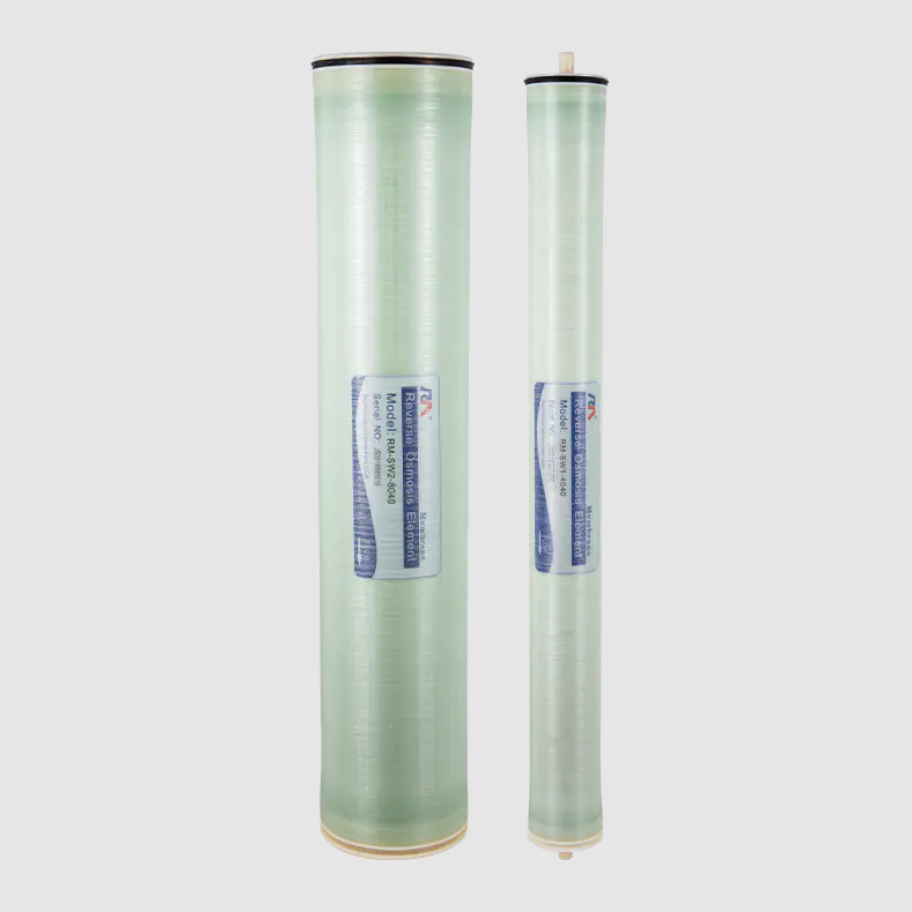
For projects that need a seawater membrane, Runmo offers the SW Series, an aromatic polyamide composite membrane element for seawater desalination. Its optimized structure can increase water production and reduce the number of membrane elements needed under the same output requirement. It also has low operating pressure, good desalination performance, and stable operation.
The SW Series is suitable for seawater and high-concentration brackish water treatment. It can also be used for boiler recharge water, wastewater reuse, and concentration or recovery processes in food and pharmaceutical production.
What Buyers Should Compare Before Ordering
For B2B buyers, quality, price, and delivery time often shape the purchase decision. Membrane specifications should be checked with feed-water data and system capacity. Buyers should also confirm how the membrane fits the planned pressure vessels and operating conditions.
Price should be evaluated with replacement frequency and operating cost rather than as a single number. Quality affects water output, salt rejection, and maintenance planning. Delivery time also matters for island projects because replacement parts may take longer to reach the site.
Technical communication before shipment can reduce selection mistakes. Water analysis, target flow, pressure conditions, and final water requirements should be shared early. This gives buyers a clearer basis for comparison.
Planning for Long-Term Operation
Coastal and island water treatment works better when projects start with source-water testing, realistic demand estimates, and a clear maintenance plan. Membrane choice, pretreatment, energy use, storage, and spare-part access should be considered together.
Runmo supplies membrane products for water treatment projects and works with B2B customers such as engineering contractors and solution providers. They focus on product matching, quality, pricing, and delivery support. Buyers planning coastal or island desalination systems can contact them to discuss feed-water conditions, required output, and suitable membrane options.
