

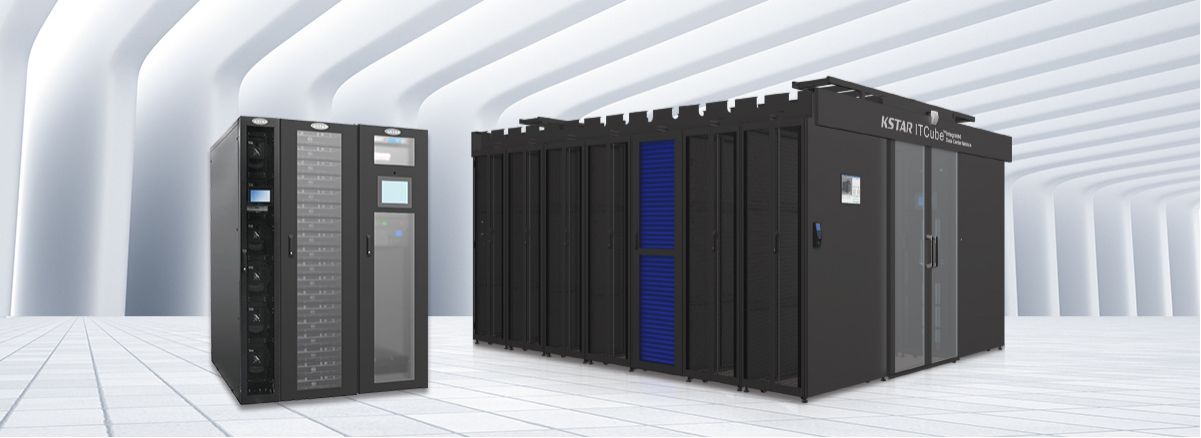
Modular design makes data center infrastructure more adaptable by allowing capacity to be deployed, expanded, and adjusted in stages as requirements change. Fixed-capacity facilities can require substantial upfront investment and lengthy construction, while changing workloads may leave some infrastructure underused or create unexpected expansion demands. Modular architecture offers a more adaptable model by dividing critical infrastructure into coordinated units that can be deployed and expanded according to actual requirements.
Why Fixed-Capacity Data Centers Face New Challenges
Traditional data centers are commonly planned around projected long-term capacity. Power distribution, cooling systems, racks, batteries, and physical space are designed together according to an expected IT load.
The difficulty is that demand does not always follow forecasts. A cloud platform may grow rapidly, while another enterprise application may require much less capacity than originally expected. Building everything at once can therefore result in unused resources, whereas insufficient initial capacity can make later expansion expensive and disruptive.
Modular architecture provides a different path. Instead of treating the entire facility as one fixed project, infrastructure can be divided into standardized units. Additional capacity can then be introduced when workload growth justifies further investment.
Standardization Can Simplify Deployment
Modular systems are based on repeatable configurations, allowing major infrastructure components to be planned around consistent architecture. This can reduce some of the engineering coordination required when every project is developed independently.
Power protection, batteries, distribution, cooling, and rack systems still need to function as an integrated environment, but their relationships can be defined before installation. This gives project teams clearer specifications and more predictable installation procedures.
The value of standardization becomes particularly apparent across multiple locations. Similar configurations can make documentation, technical training, maintenance, and operational processes easier to reproduce. Instead of supporting completely different infrastructure structures at every site, teams can work from a more consistent technical foundation.
Flexible Capacity Can Improve Investment Planning
Modularity also changes the relationship between infrastructure investment and business growth. A company does not necessarily need to build its maximum expected capacity on the first day of operation.
A staged approach can establish an infrastructure base for current workloads and add capacity as requirements develop. This can reduce the need to commit capital to infrastructure that may not be immediately utilized.
The approach also supports more practical forecasting. Rather than relying entirely on a distant five- or ten-year estimate, capacity planning can be reviewed as business conditions change.
This flexibility is relevant to the broader portfolio associated with KSTAR. Its data center business covers technologies such as UPS, batteries, precision air conditioning, and modular data center infrastructure, allowing power and environmental requirements to be considered within a connected architecture rather than as isolated equipment categories.
Power and Cooling Need to Scale Alongside IT
A data center module does not operate independently from its supporting infrastructure. Increasing IT capacity affects power demand, heat generation, airflow, and maintenance requirements.
A modular strategy can help these systems develop alongside computing capacity. UPS systems, battery configurations, distribution capacity, and cooling resources can be considered in relation to the infrastructure being deployed instead of automatically sizing the entire facility for a distant maximum load.
This approach can also make expansion planning clearer. Before additional IT capacity is installed, facility teams can evaluate whether electrical capacity, cooling, physical space, and redundancy are sufficient.
Such coordination becomes increasingly important as rack density rises. High-density computing can place greater pressure on both electrical and thermal systems, making integrated planning more important than simply adding more racks.
Modular Architecture Can Fit Different Sites
Data centers are no longer limited to large purpose-built buildings. Infrastructure may need to be deployed within enterprise campuses, industrial facilities, remote locations, or other sites with limited construction space.
Modular systems can provide greater flexibility because critical infrastructure is organized into defined units. This can simplify site planning when physical conditions vary between locations.
This approach can also support distributed deployments. A company may need similar infrastructure across several regions while adapting individual installations to different space constraints, environmental conditions, or workload profiles.
Rather than developing an entirely new infrastructure concept for every location, standardized modular architecture can provide a common framework that is adjusted to local requirements.
Integration Is Still the Core of Modularity
Modularity does not mean that infrastructure components can simply operate independently. Effective modular design depends on strong integration between electrical systems, cooling, racks, batteries, distribution, monitoring, and redundancy.
This is why the term data center infrastructure should be considered at the system level. A modular UPS may provide flexible capacity, but its value depends partly on how it interacts with batteries, distribution equipment, cooling, monitoring, and the wider facility.
Buyers should therefore assess how modules communicate, how expansion is performed, and how maintenance activities affect existing capacity. The architecture should provide clear pathways for adding or replacing infrastructure without introducing unnecessary compatibility issues.
A well-integrated design can also support more consistent operational procedures. Standardized modules make it easier for technical personnel to understand recurring configurations and maintenance requirements across different deployment sites.
What Buyers Should Examine Before Deployment
Selecting modular infrastructure requires more than checking the specifications of individual components. Current IT load, rack density, redundancy expectations, cooling requirements, available space, monitoring, maintenance access, and projected growth should all be considered together.
Future expansion is particularly important. Buyers should determine whether additional modules can be introduced without major redesign and whether power and cooling systems can scale at the same time.
Lifecycle costs also deserve attention. Energy consumption, maintenance, replacement procedures, and future expansion expenses can have a significant effect on the overall economics of a data center.
For organizations operating multiple sites, standardization may provide additional value by simplifying spare-parts planning, technical training, documentation, and routine maintenance.
Building Infrastructure Around Changing Demand
The move toward modular architecture reflects a broader change in data center planning. Instead of building a fixed infrastructure footprint around uncertain future demand, organizations can create a foundation that develops with actual workloads.
This model can make capacity expansion more structured while providing greater flexibility in investment, deployment, and site selection. It also encourages infrastructure teams to consider power, cooling, IT equipment, and physical space as parts of one scalable system.
As workloads continue to evolve, Infrastructure for Data Centers can be approached as an expandable framework rather than a static collection of equipment. Modular design provides a practical way to balance reliability, deployment efficiency, capacity growth, and long-term operational requirements.
