

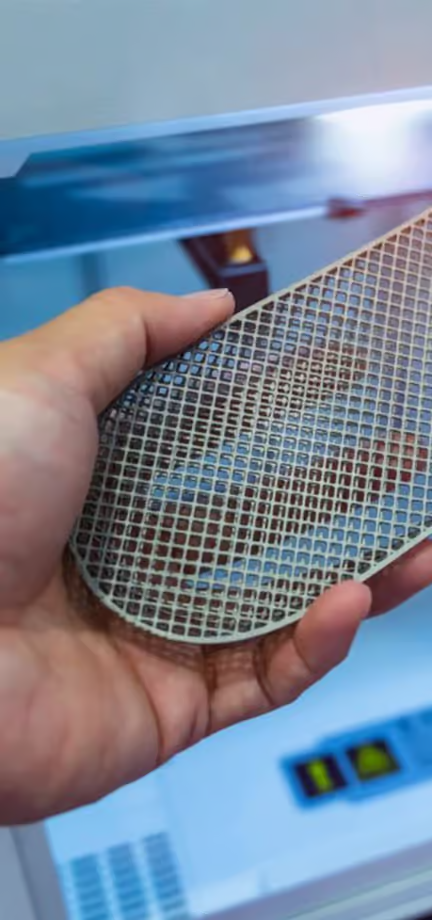
In industrial metal manufacturing, selecting appropriate additive equipment requires matching component physical dimensions with machine capabilities. Selective Laser Melting (SLM) hardware spans a broad spectrum of build volumes, ranging from compact desktop units for delicate dental restorations to multi-laser industrial platforms designed for large aerospace structures.
Choosing an oversized machine for small parts leads to higher gas consumption and unnecessary operational overhead. Conversely, attempting to produce large components on smaller machines forces engineering teams to split assemblies, introducing secondary joining steps and potential structural failure points.
Evaluating how build volume, laser optics, and thermal dynamics interact across different part scales allows procurement teams and plant managers to optimize operational efficiency. This article outlines the core technical criteria for selecting SLM systems based on component dimensions and application requirements.
The Interplay Between Part Scale and Machine Architecture
When evaluating equipment scale, engineering teams examine several physical factors beyond basic length, width, and height specifications.
Optical Beam Spot and Resolution
Many compact platforms adopt narrower laser beam spot sizes, typically ranging from 50μm to 70μm, to support fine feature resolution, crisp thin-wall formation and improved surface quality.Larger industrial platforms may adopt wider spot sizes (70 μm to 120 μm) or dynamic zoom optics to accelerate powder melting rates across expansive build plates.
Gas Flow Uniformity and Chamber Dynamics
As build volume increases, maintaining uniform laminar gas flow across the entire powder bed becomes increasingly complex. High-precision gas recirculation systems support even evacuation of weld spatter and vapor fumes, helping reduce the risk of laser scattering across different component positions on the build plate.
Thermal Stress and Substrate Heating
Larger metal components retain substantial thermal energy during multi-day print cycles. Systems designed for medium and large components require robust substrate preheating features to mitigate steep thermal gradients, preventing geometric warping and micro-cracking across extended cross-sections.
Categorizing Machine Scale by Industrial Application
Selecting a platform depends heavily on the spatial requirements and production volumes of targeted component families.
How Does Build Volume Impact Production in a 3d Metal Printer?
Understanding how physical build volume aligns with part geometry allows manufacturers to select a 3d metal printer that balances throughput with operating costs.
Small-Format Systems (≤150 mm Envelope): Compact platforms excel at producing detailed, micro-scale components. Because the build chamber volume is low, reaching inert oxygen concentrations strictly below 100 parts per million (ppm) requires minimal purge time and gas consumption. These platforms suit dental laboratories producing custom crowns, as well as medical device manufacturers fabricating orthopedic screws or micro-valve components.
Medium-Format Systems (200 mm to 400 mm Envelope): Medium-capacity platforms serve as the workhorse of general industrial manufacturing. They balance high throughput with precise feature definition. These systems accommodate plastic injection mold inserts with conformal cooling pathways, automotive engine brackets, and fluid control manifolds.
Large-Format Systems (400 mm to 800 mm+ Envelope): Large-scale machines address structural aerospace components, such as turbine housings, rocket engine shrouds, and large automotive tooling inserts. These platforms frequently incorporate multiple lasers operating in parallel to maintain reasonable build times across expansive powder beds.
Mid-Scale Engineering and Wavelength Optimization
For many industrial enterprises, medium-format machines offer the ideal balance between build capacity and operational flexibility. However, processing specific highly reflective metals—such as pure copper or precious metal alloys—presents distinct challenges for standard infrared fiber lasers, regardless of component footprint.
What Technical Factors Influence slm 3d printing for Mid-Sized Components?
When processing reflective or heat-conductive alloys, beam absorption plays a critical role in energy density and overall weld pool stability during slm 3d printing workflows.
For industrial organizations seeking specialized mid-capacity hardware, LiMN 3D develops metal additive equipment, forming technologies, and custom processing solutions. Their product lineup includes the LM-M250G, a dedicated additive system featuring a 500W green fiber laser designed specifically to enhance the processing of highly reflective non-ferrous metals and specialized alloys.
The unit features a build volume of 256 × 256 × 320 mm³ within machine dimensions of 2118 × 1304 × 2034 mm³. By utilizing a green wavelength laser source, the system delivers improved energy coupling in materials that naturally reflect standard infrared radiation. The platform operates with layer deposition thicknesses from 20 to 120 μm and scanning speeds reaching up to 7 m/s. Operating under Nitrogen or Argon gas shielding with chamber oxygen levels held below 100 ppm, the system processes materials including copper alloys, high-temperature alloys, stainless steel, and tool steels. The equipment uses TH-3Dprint control software to execute scan path planning and slicing management.
Real-World Scaling Application Scenarios
Industrial enterprises apply these equipment sizing guidelines across several operational scenarios:
Dental and Orthopedic Restorations
Dental labs fabricating Cobalt-Chromium or titanium implant components often opt for compact SLM systems, which can help reduce inert gas consumption and support faster turnaround for small, patient-specific production batches.
Tooling Inserts and Reflective Heat Exchangers
Mold manufacturers producing tool steel core blocks utilize medium-capacity machines to integrate contoured internal fluid channels. When fabricating high-conductivity copper heat exchangers, green-laser systems provide the specialized energy delivery needed for dense, low-porosity walls.
Aerospace Structural Components
Aerospace prime contractors producing titanium engine mounts select multi-laser, large-format platforms. Printing these components as unified single structures eliminates mechanical fasteners and lowers overall assembly weight.
Practical Procurement Summary
Selecting an SLM system requires matching build volume, optical beam specifications, and laser wavelength to specific component scales. By aligning hardware capabilities with part dimensions, engineering managers can establish reliable, cost-effective additive manufacturing operations.
