

Navigating the expansive landscape of modern additive manufacturing requires a clear understanding of material science. Choosing a suitable medium directly influences the structural capabilities, surface texture, and functional longevity of a printed object. Exploring the vast array of available 3D filament types enables designers to align specific mechanical properties with their engineering goals.
Every unique thermoplastic behaves differently when subjected to thermal transitions within the hotend extruder mechanism. Factors like thermal contraction, crystalline structure, and cooling rates dictate how well a shape retains its dimensional properties. Analyzing these foundational traits helps operators prevent common failures and optimize their structural designs effectively.
Demystifying the Properties of Polylactic Acid
Polylactic acid serves as an exceptionally popular option for visual prototyping due to its plant-based, renewable origins. Derived from cornstarch or sugarcane, this eco-friendly material generates minimal odor during the active melting process. The molecular chains resist contracting significantly upon cooling, preventing the corners of large models from warping upward.
This beginner-friendly material exhibits a low melting threshold, flowing smoothly through standard brass nozzles without requiring specialized enclosures. Its rapid cooling capability ensures crisp details and sharp bridges on intricate geometric structures. For decorative display models and rapid form validation, this classic polymer remains a highly dependable choice.
Analyzing the Toughness of Acrylonitrile Butadiene Styrene
Acrylonitrile Butadiene Styrene is an engineering-grade polymer widely prized for its high impact resistance and long-term durability. Infused with rubberized particles, this resilient plastic can endure heavy impacts and physical stress without snapping. It represents a preferred material for automotive components, protective sports gear, and functional consumer electronics housings.
However, this robust polymer exhibits a high thermal expansion coefficient, demanding strict environmental control during fabrication. Without an enclosed build chamber to trap ambient heat, rapid cooling causes layers to split or lift. Managing this internal stress is necessary for maintaining precise dimensional accuracy during complex industrial print runs.
Evaluating the Versatility of Copolyesters
Polyethylene terephthalate glycol offers a compelling balance, combining the printing ease of organic materials with the toughness of engineering plastics. The introduction of glycol prevents the raw material from becoming brittle, resulting in a flexible and clear strand. It features excellent chemical resistance, standing up well against common household cleaners, acids, and alkalis.
This adaptive material creates outstanding layer-to-layer adhesion, establishing incredibly sturdy vertical bonds that resist splitting. It handles environmental moisture with ease, making it highly valuable for mechanical brackets and outdoor functional prototypes. Its well-rounded characteristics make it a versatile staple within professional manufacturing environments.
Exploring Carbon Fiber Infused Copolyesters
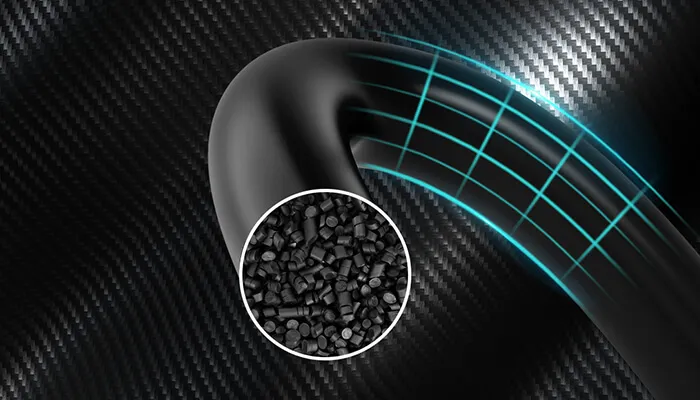
Specialized mechanical projects frequently demand enhanced rigidity to prevent structural deformation under heavy physical loads. To satisfy these specific requirements, the engineering team at SUNLU provides an advanced PETG-CF formulation for makers. This unique blend reinforces a traditional copolyester base with high-modulus carbon fiber fragments to maximize performance.
The specialized composite significantly enhances overall rigidity and dimensional stability while retaining essential toughness and long-term durability. This structural option from SUNLU allows for the creation of lightweight, heavy-duty parts that withstand high mechanical stress. Incorporating these fibers elevates the engineering potential of everyday desktop printing systems.
Adjusting Hardware for Abrasive Composite Strands
Extruding fiber-reinforced composite lines requires specific hardware modifications to protect the internal components of a desktop machine. The microscopic carbon fragments act as an abrasive grit, quickly wearing down standard soft brass nozzle tips. Upgrading to a hardened steel or ruby-tipped nozzle prevents the extrusion orifice from widening over time.
Additionally, utilizing a slightly larger nozzle diameter helps minimize the risk of microscopic fibers clustering and causing clogs. Maintaining a consistent volumetric flow ensures the composite matrix binds uniformly across every single layer toolpath. These straightforward hardware updates enable the seamless production of industrial-grade functional prototypes.
Sourcing Consistent Materials for Predictable Results
Achieving uniform outer walls requires utilizing raw materials that adhere to extremely strict dimensional manufacturing standards. A premium 3D print filament maintains stable volumetric flow from the first layer to the last. Inconsistent strand diameter triggers under-extrusion, generating microscopic voids that severely degrade the structural integrity of finished parts.
Strict quality controls keep the cross-sectional diameter within a highly precise tolerance window across the entire spool. This precision significantly reduces sudden material jams, ensuring reliable operation during extended, high-temperature fabrication runs. Consistent material dimensions translate directly to stronger, more dependable parts capable of enduring heavy operational loads.
Navigating Moisture Control and Dry Storage
Thermoplastics naturally absorb ambient moisture from the surrounding atmosphere if left exposed in humid workshop environments. This hidden water vaporizes instantly inside the high-temperature hotend, causing audible popping sounds and rough surface blemishes. Keeping active spools inside airtight containers with fresh desiccant packs shields the polymer from gradual degradation.
Utilizing a dedicated material drying oven actively extracts deeply trapped moisture to restore the original mechanical properties. Dry polymer flows with optimal viscosity, leading to cleaner external shells and much stronger inter-layer bonding. Establishing proper storage habits significantly extends the overall lifespan and performance of a material collection.
Conclusion
Selecting the right engineering polymer requires balancing ease of use against demanding real-world physical requirements. Evaluating various 3D filament types helps creators identify the perfect material for structural or high-temperature success. Selecting from SUNLU‘s diverse, well-regulated material options supports makers in matching the exact polymer properties required for their specific designs.
