

Contemporary entry design often combines lighting with spatial guidance, safety, and visual structure. Wall-mounted lighting is no longer limited to simple illumination; it is now used to shape perception of depth and movement in entrances. Designers working with residential and commercial projects frequently explore flexible mounting strategies to balance aesthetics with functionality. Within this context, structured placement of wall lighting helps create clearer circulation paths while supporting architectural identity. At Keyida, we apply these principles in our outdoor lighting solutions to ensure that fixture design supports both functional illumination and architectural coordination in entryway environments.
Entry Framing with led outdoor wall sconce
The first position often used in modern entrances is door framing, where lighting defines the main access point. A led outdoor wall sconce can be installed on both sides of the entry door to create balanced visual guidance for visitors. This arrangement supports visibility at night and highlights façade proportions without overwhelming the design language of the building exterior.
Corridor Transition Using led lamp on wall
In extended entry corridors, lighting placement along the side wall helps guide movement from outdoor to indoor zones. A led lamp on wall is commonly positioned at regular intervals to maintain consistent brightness levels. This method reduces visual discontinuity and supports safer navigation in narrow transitional spaces between entry and interior areas.
Ceiling-Wall Junction Accent
Another practical position involves mounting lights near the junction between ceiling and wall. This placement helps soften architectural edges and reduce shadow-heavy corners. Designers often use this approach in minimalist entrances where indirect lighting contributes to a cleaner visual rhythm without introducing excessive decorative elements.
Staircase Entry Illumination with led outdoor wall sconce
For multi-level entry zones, staircases require directional lighting for safety and depth perception. A led outdoor wall sconce installed along stair risers or adjacent walls helps define step boundaries. This positioning is particularly useful in semi-outdoor entry steps, where visibility changes under different environmental conditions.
Porch Boundary Lighting Using led lamp on wall
Porch areas benefit from lighting that defines spatial edges without blocking openness. A led lamp on wall can be placed at mid-height along porch columns or side walls. This helps outline the boundary between outdoor open space and sheltered entry zones while maintaining a soft visual transition.
Product Integration: LED Outdoor Wall Sconce –G0936
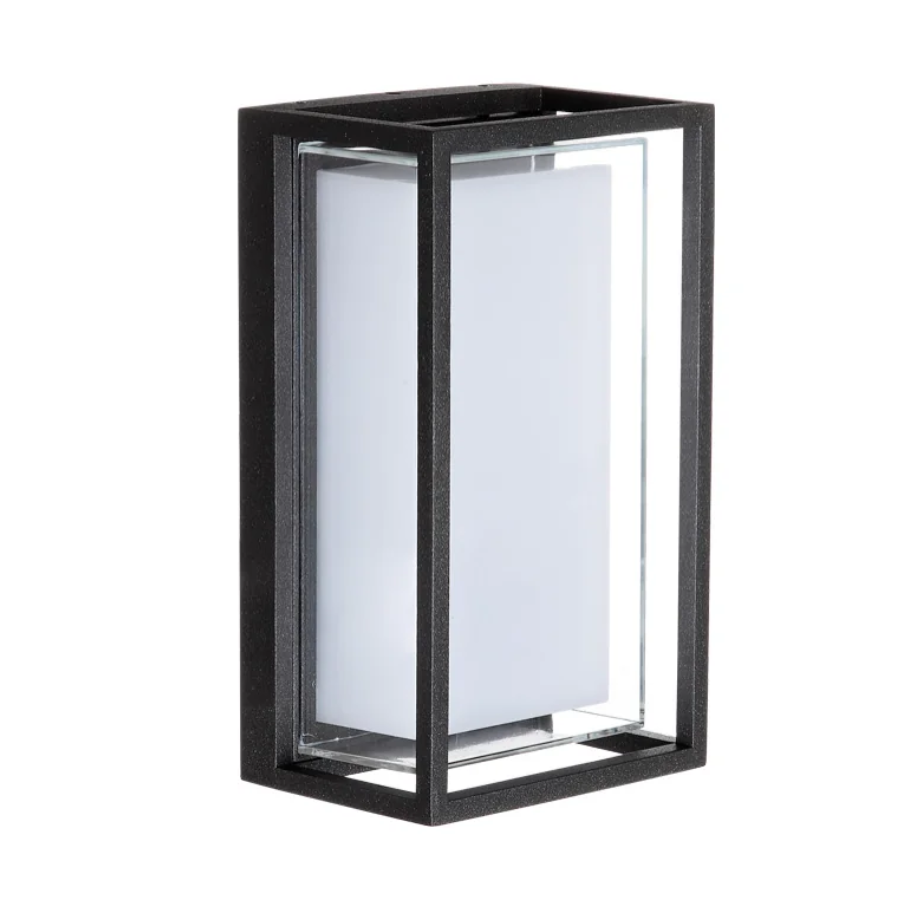
In practical applications, products such as LED Outdoor Wall Sconce –G0936 are used in entry lighting layouts. This fixture applies a die-cast aluminum body combined with a PC lampshade for structural stability in exterior environments. It uses an Epistar SMD 12W LED chip and a KEDA driver, operating within 85–265V AC input. With IP65 protection and a 3-year warranty, it is suitable for long-term exterior installation scenarios.
Facade Symmetry Lighting with led outdoor wall sconce
Symmetrical façade lighting is often used in contemporary entry architecture to create visual order. A led outdoor wall sconce can be installed in mirrored positions across the entrance façade. This arrangement helps reinforce architectural balance while ensuring consistent illumination across structural elements such as pillars and wall panels.
Indoor-Outdoor Threshold Definition Using led lamp on wall
The threshold between exterior and interior spaces is a key area for lighting transition. A led lamp on wall placed near entry doors or glass partitions helps visually separate zones without creating harsh contrasts. This positioning supports gradual adaptation of eye comfort when moving between different brightness environments.
Signage and House Number Highlighting
Entry lighting is also used to improve visibility of signage elements such as house numbers or business identifiers. Wall-mounted fixtures placed near signage areas help ensure readability at night. This application is particularly relevant for commercial buildings where clear identification supports navigation and user experience.
Layered Entry Lighting Composition
Modern entry design often uses layered lighting strategies combining ambient, accent, and functional light sources. Wall-mounted fixtures contribute to this structure by filling mid-level lighting gaps. This helps reduce reliance on ceiling-only lighting and improves spatial depth perception in compact entry environments.
Landscape Connection at Entry Edge
The final creative position involves connecting entry lighting with surrounding landscape elements such as plants, pathways, or boundary walls. Wall-mounted lighting positioned near greenery or textured surfaces can enhance material contrast and improve nighttime spatial recognition without introducing excessive brightness.
Conclusion: Structured Lighting in Contemporary Entry Design
Careful placement of wall lighting plays a significant role in shaping how entry spaces are experienced. From framing doors to guiding corridors and supporting architectural symmetry, each positioning strategy serves both functional and visual purposes. In many engineering applications, manufacturers such as Keyida support these layouts through durable exterior lighting solutions designed for varied installation environments. Thoughtful integration of wall-mounted fixtures continues to support safer, clearer, and more visually coherent entry spaces across different building types.
