

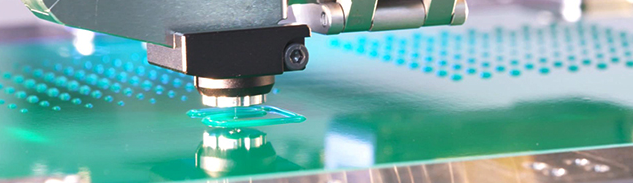
Automotive electronics depend on reliable adhesive application to protect sensitive circuits, secure components, and maintain performance under demanding operating conditions. Selecting a suitable glue dispensing valve requires consideration of material viscosity, deposit geometry, vibration exposure, thermal cycling, and production speed.
A dispensing process that works well on a standard circuit board may need different parameters when applied to a power module, sensor, or compact control unit. Axxonauto operates in precision fluid dispensing, where matching equipment capabilities to application requirements is an important part of process development.
How to Manage Thermal and Mechanical Stress in Automotive Glue Dispensing?
Automotive electronic assemblies encounter repeated temperature changes during normal operation. Adhesives used for bonding, sealing, or encapsulation must accommodate the thermal expansion of different materials, including metals, plastics, and circuit substrates. A deposit with unsuitable dimensions or poor material compatibility may develop cracks, lose adhesion, or place additional stress on nearby components.
Vibration introduces another challenge, particularly in assemblies installed near motors, transmissions, and road-facing structures. Adhesive placement must provide the intended mechanical support without covering electrical contacts or interfering with neighboring parts. Engineers should evaluate the joint design alongside the material’s flexibility, curing behavior, and adhesion characteristics.
Environmental exposure also influences dispensing requirements. Moisture, dust, oils, and temperature fluctuations can affect both adhesive performance and process stability. Material qualification should reflect the intended operating environment rather than relying exclusively on initial bonding strength or appearance immediately after application.
| Challenge | Effect on dispensing | Consideration |
| Thermal cycling | Adhesive expansion and contraction | Material flexibility and joint design |
| Vibration | Component movement during operation | Adhesive placement and mechanical support |
How to Control Fluid Flow and Deposit Geometry?
Automotive applications use adhesives with a broad range of viscosities, from readily flowing fluids to thicker compounds designed to remain in place. Viscosity affects pressure requirements, droplet formation, spreading, and the time needed to produce a consistent deposit. Temperature control and stable material delivery help reduce variations between successive applications.
Deposit geometry deserves equal attention. A narrow bead may be needed around a sensor housing, while a larger volume could be required beneath a component or inside an enclosure. Excess material can contaminate nearby connectors, while insufficient coverage may leave gaps that weaken bonding or environmental protection. The target volume should be defined according to the joint design and verified through inspection.
Valve response must match the material’s behavior. Excessive dispensing pressure can cause splashing or unwanted spreading, whereas insufficient actuation force may produce incomplete deposits. For medium- and high-viscosity fluids, engineers should assess the interaction between valve force, operating frequency, nozzle design, and material temperature instead of adjusting any single setting independently.
How to Balance Precision, Cycle Time, and Process Stability?
High-volume automotive production places strict demands on repeatability. Even small variations in deposit size or location can become significant when repeated across thousands of assemblies. Calibration should account for board positioning, component height, nozzle condition, and differences between material batches. Regular checks help distinguish equipment variation from changes in the adhesive itself.
Cycle time is more complex than the valve’s dispensing frequency. Robot travel, board loading, material replenishment, curing requirements, and inspection all contribute to the time needed for each assembly. A faster valve may offer limited productivity benefits if its motion path is inefficient or if frequent cleaning interrupts the production sequence.
The APJ2000 Piezo Jetting Valve is one option for applications involving medium- and high-viscosity fluids. Its specifications include adjustable piezoelectric jetting frequency up to 550 Hz, a minimum dot diameter of 0.2 mm, and jetting force up to twice that of the standard version. Its modular design supports faster maintenance, although actual results depend on adhesive properties, deposit requirements, and validated process settings.
How to Integrate Dispensing Into Automotive Quality Control?
Dispensing should be treated as part of the wider manufacturing quality system rather than an isolated machine operation. Process recipes can record material type, temperature, pressure or actuation settings, dispensing frequency, and inspection criteria. Consistent records make it easier to investigate defects and compare results across production batches.
Inspection methods should reflect the function of the adhesive. Visual checks can identify missing deposits, misplaced beads, and obvious overflow, while dimensional measurement can assess deposit width or diameter. Applications requiring internal coverage or protection may need additional verification methods based on component design and material characteristics.
Maintenance planning also affects long-term consistency. Nozzle residue, wear, material contamination, and changes in fluid supply can gradually alter dispensing behavior. A preventive schedule based on operating conditions and observed process variation helps reduce unexpected interruptions and supports stable production quality. Glue dispensing systems should be evaluated not only by their initial accuracy but also by how consistently they perform throughout normal manufacturing cycles.
Conclusion
Automotive electronics require adhesive application that accommodates material behavior, environmental stress, tight component spacing, and demanding production schedules. The right equipment configuration emerges from the relationship between joint design, fluid characteristics, process control, and inspection—not from speed specifications alone.
With application trials and documented quality criteria, manufacturers can assess whether Axxonauto technologies fit their dispensing requirements while maintaining a practical balance between precision, reliability, and production efficiency.
FAQs
Why Is Dispensing Accuracy Important in Automotive Electronics?
Accurate deposits help maintain bonding strength, protect sensitive components, and prevent adhesive from reaching connectors or other restricted areas. Repeatable placement also reduces variation across production batches.
How Does Adhesive Viscosity Affect Valve Selection?
Higher-viscosity materials may require greater actuation force and careful control of temperature and delivery settings. Lower-viscosity fluids may spread more readily, making deposit volume and placement especially important.
What Does a 550 Hz Jetting Frequency Mean?
A frequency of 550 Hz represents up to 550 jetting cycles per second under suitable operating conditions. Actual production output depends on material behavior, motion requirements, deposit quality, and the validated process window.
How Can Automotive Manufacturers Maintain Dispensing Consistency?
Regular calibration, preventive maintenance, material control, process-record management, and application-specific inspection can help identify deviations before they affect larger production batches.
