

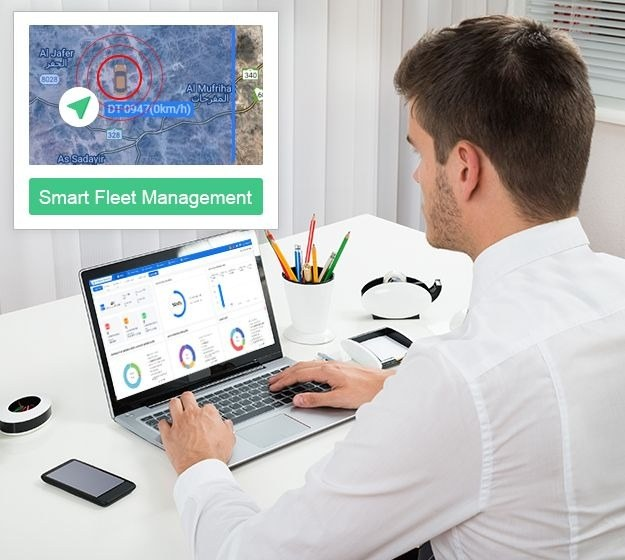
School transportation combines route control, passenger responsibility, vehicle safety, and communication with schools or families. A software dashboard cannot manage those tasks by itself unless onboard devices provide reliable location and event data. In practice, school bus fleet management technology depends on integration between trackers, cameras, driver-safety hardware, vehicle inputs, communication networks, and the application used by operators.
At the application layer, school bus tracker software can turn those signals into route status, arrival information, alerts, history, and reports. The integration challenge is to make sure that every device identifies the correct bus, timestamps events consistently, and sends data in a format the software can use. A technically sound deployment also needs procedures for installation, testing, maintenance, privacy, and access control.
Define the Onboard Data Needed for Route Supervision
Route visibility usually starts with location, ignition state, trip history, and geofenced stops. Those data points can show whether a bus left the depot, followed the planned corridor, reached designated stops, and returned as expected. Update intervals should match the communication purpose: a parent-facing arrival estimate may need different timing from a monthly operations report.
Beyond position data, onboard video and driver events can help explain safety exceptions. Road-facing cameras, driver monitoring, and selected vehicle inputs can provide context for harsh maneuvers, distraction, or incidents near stops. In daily service, school bus fleet management technology works best when alerts are tied to defined response procedures rather than being collected simply because the device can generate them.
BSJ Technology‘s school-bus solution highlights real-time tracking and notifications, driver-behavior monitoring, vehicle-health monitoring, preventive maintenance, route optimization, and reporting. These functions give buyers a useful reference architecture, but deployment teams still need to determine which signals are required for their own routes, regulations, and communication responsibilities.
Stop design deserves field testing because school routes often include closely spaced pickup points. Geofence size, direction of travel, dwell time, and reporting frequency can affect whether the system records an arrival correctly. Testing several normal route days helps administrators distinguish true missed stops from GPS variation, temporary detours, or buses that pass near a stop without actually serving it. Route supervisors can keep those tested stop parameters as a controlled template when a new school year or route plan begins.
Integrate Software, Devices, and User Roles as One System
A reliable interface must preserve device identity from the vehicle to the application. Each tracker or camera needs a controlled relationship with the bus number, route, depot, and service record. If devices are swapped during maintenance, the assignment change must be reflected quickly so school bus tracker software does not show data under the wrong vehicle.
User permissions also matter because different groups need different levels of information. Dispatchers may require live location and incident video, maintenance staff may need device health and fault history, while school administrators may only need route status and approved reports. Role-based access reduces unnecessary exposure of sensitive operational data and makes the interface easier for each user group.
System integrators should test message mapping before broad deployment. GPS fields, alarms, camera events, driver identifiers, and device-health signals need to arrive with the expected names and timestamps. For school-bus projects, BSJ Technology supports third-party platform integration and flexible OEM/ODM work, which can help solution providers adapt the hardware layer, but software-environment validation remains essential.
Video and location retention policies should be written before broad access is granted. Incident footage may be needed by safety teams, while routine route data may support shorter operational reviews. The organization can define who may view or export video, how long records remain available, and how requests from schools or families are handled so the technical system fits local privacy and governance requirements.
Create a Deployment Process That Schools Can Sustain
Installation quality affects every later report. Antenna position, camera angle, cable protection, power behavior, and device mounting need standardized instructions that account for the bus models in the fleet. A field-validation set can verify location continuity, video coverage, alert accuracy, network performance, and the time needed for technicians to complete a repeatable installation.
Operational handover should include more than a user login. The school or transport operator needs escalation procedures for missed data, device faults, inaccurate stops, driver alerts, and replacement hardware. Firmware and configuration changes should be controlled so a software update does not quietly alter reporting intervals or alert behavior across the fleet.
When onboard hardware and software are managed as one lifecycle, school transportation teams gain more dependable information for dispatch, safety review, maintenance, and communication. Operational value comes from consistency: the correct bus, the correct data, the correct user permissions, and a clear response process. That foundation is more important than adding a long list of features that operators cannot maintain.
Sustainable operation also requires spare hardware and support ownership. A failed tracker, camera, or antenna should have a clear replacement path, and the team should know whether troubleshooting begins with the school, transport contractor, integrator, or device supplier. Defined escalation reduces the time a bus remains partially monitored and keeps responsibility clear during busy route periods. A quarterly review of these procedures can confirm that route changes, staffing changes, and new vehicle assignments have not weakened the original monitoring process.
